A 2021 Tesla Model Y left an Alabama highway, hit two trees, and caught fire, killing its driver, 29-year-old Kayleigh Page. Her 7-month-old daughter was pulled from the burning car by a stranger who saw it happen.
Troopers reported it as a single-vehicle wreck. What they didn’t say, and likely didn’t know, is that Tesla’s own data shows the car’s driver-assist system was engaged. This is part of an matching reported crashes to Tesla’s redacted NHTSA data.
What happened on Highway 157
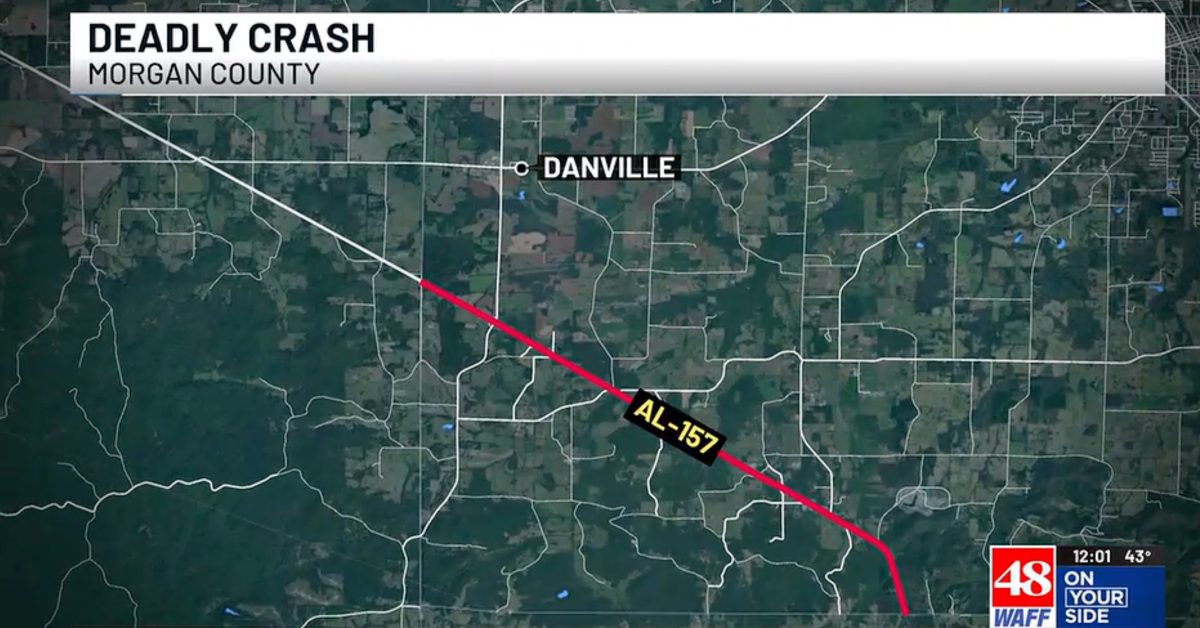
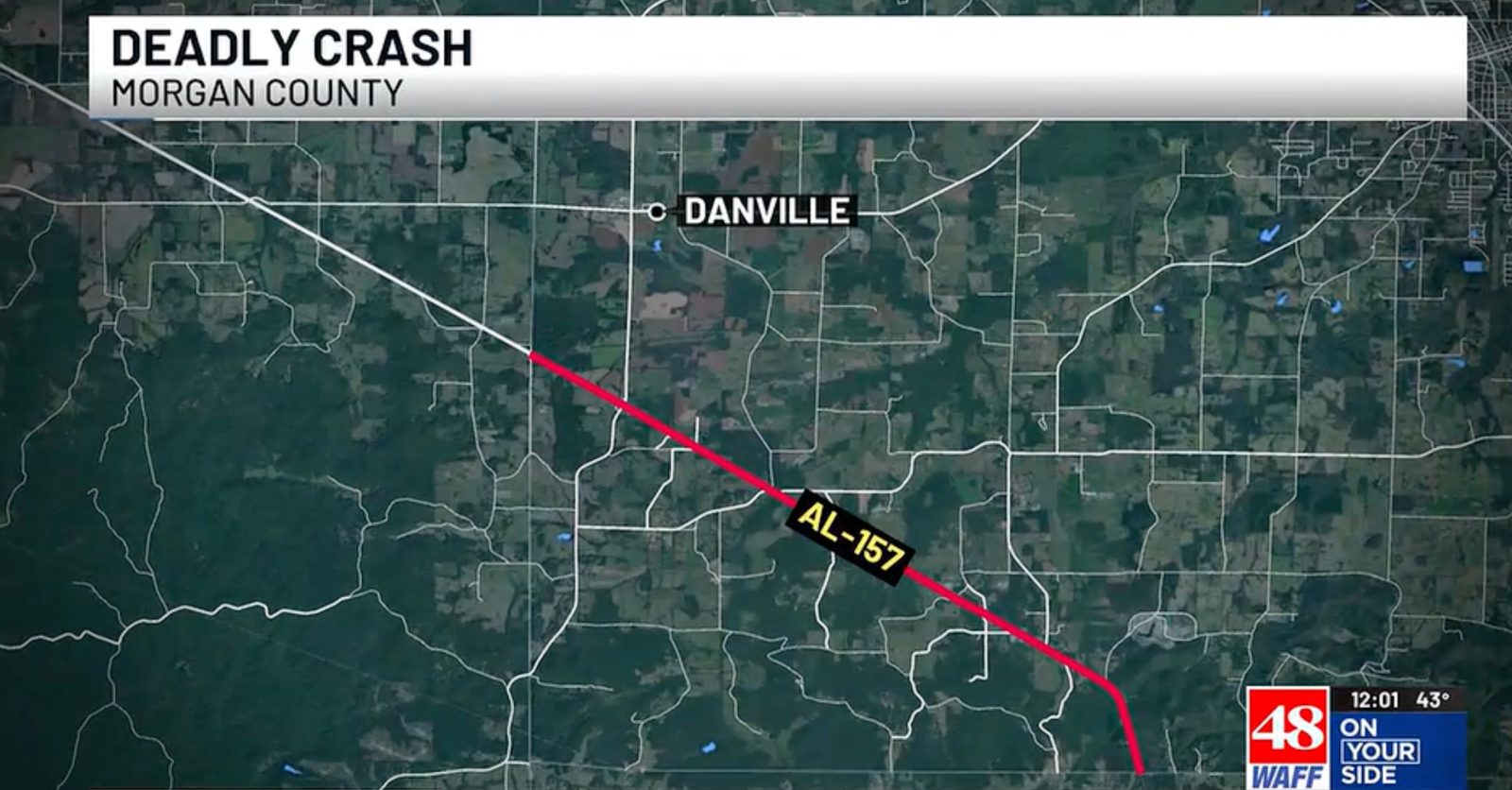
Around 7:40 p.m. on Sunday, December 7, 2025, a 2021 Tesla Model Y Long Range was heading along Alabama Highway 157 near the Cullman County line, about a mile north of Battleground in Morgan County. The car left the roadway, struck two trees, and caught fire, according to the Alabama Law Enforcement Agency.
The driver, Kayleigh Page, 29, of Waterloo, was pronounced dead at the scene. Her infant daughter, a passenger, was hurt but survived, and a passerby who witnessed the crash rescued the baby from the vehicle, Morgan County Sheriff Ron Puckett said. The child was hospitalized in stable condition.
State troopers worked it as a routine fatal wreck. No report mentioned Autopilot, “Full Self-Driving,” or any driver-assist system. To the public, it was a car that ran off the road.
What Tesla told the federal government
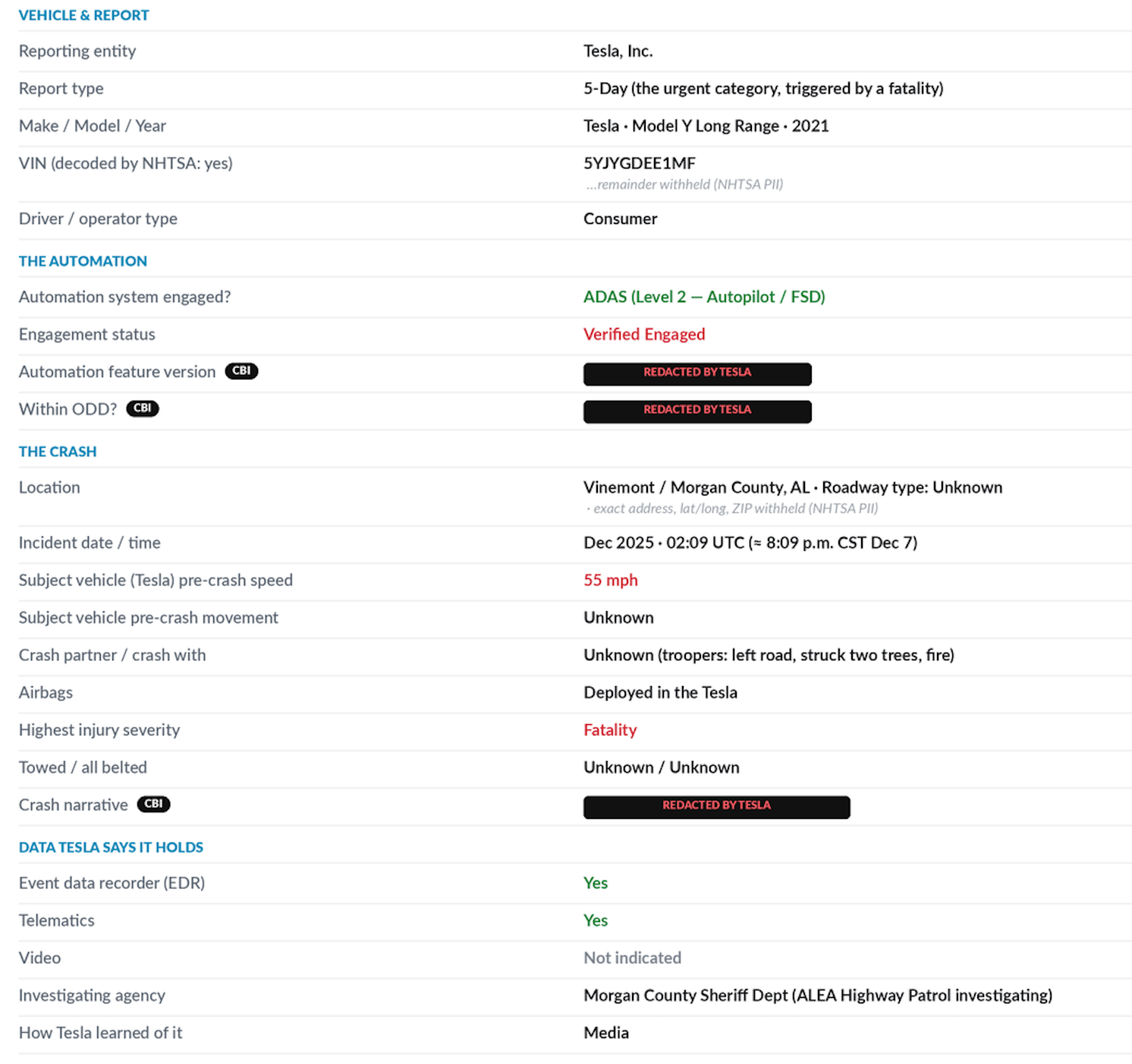
Under a NHTSA Standing General Order, automakers must report crashes where a Level 2 driver-assist system was engaged within 30 seconds of impact. Tesla filed one on this crash.
In it, Tesla identifies the car as a 2021 Model Y and marks the automation “Engagement Status” as “Verified Engaged” — meaning it confirmed through its own telematics that the system was active. It logs a pre-crash speed of 55 mph and records a fatality. It says it holds the event-data recorder and telematics from the car.
Then it redacts the three fields that would explain the crash: the narrative, the software version, and whether the road was within the system’s approved operating area. All blacked out as “confidential business information,” the . It even left the “crash with” and roadway fields marked “unknown,” so its own filing doesn’t say the car hit trees.
A road departure, the most common Tesla driver-assist crash
This is the failure mode that shows up more than any other. Electrek’s analysis of the full NHTSA dataset found that of the Tesla driver-assist crashes where the pre-crash movement is disclosed, the single largest category is the car leaving its lane or the road, well ahead of rear-ends or turns. A Tesla drifting off a highway and into the trees is not an outlier in this data. It’s the pattern.
We can’t say whether this was basic Autopilot or “Full Self-Driving,” because Tesla redacted the software version. On a rural two-lane highway at 55 mph, either could have been engaged. Basic Autopilot holds a lane and a speed on roads like this, and FSD does too. Both have documented failures where the car wandered out of its lane. The field that would tell us which system was steering is the one Tesla blacked out.
Why we keep doing this
Tesla is, more aggressively than ever, encouraging owners to treat a Level 2 driver-assistance system as if it drives itself. It sells the software as “Full Self-Driving,” Elon Musk keeps promising unsupervised autonomy is months away, and the branding invites drivers to trust the car.
Around the time of the crash, Musk even suggested that Tesla drivers could look at their phones when using FSD.
But it is still Level 2. The human is driving and responsible at all times, and Tesla’s own actions confirm it: consumer FSD still requires supervision, and its robotaxi service is a small, closely monitored fleet. That gap between the marketing and the machine breeds the complacency that gets people killed.
The redaction makes it worse. At the moment Tesla is telling owners to trust the car, it’s hiding the records that would show how the system behaves when things go wrong. What’s confirmed here is narrow and real: a driver-assist system was engaged when this car left the road and a young mother died. Everything that would explain how, Tesla sealed.
How we matched it: the NHTSA record is unredacted on location (Vinemont/Morgan County), state, vehicle (2021 Model Y), the fatality, and the month. Tesla logs the incident time as 02:09 UTC, which converts to about 8:09 p.m. local, inside the window troopers reported, who put the crash between roughly 7:40 and 8:46 p.m. It’s the only fatal Tesla crash in that area that month. It’s the same crash. Electrek has reached out to the Alabama Law Enforcement Agency for the crash report and the vehicle data, and asked whether investigators received Tesla’s raw telemetry or only Tesla’s own interpretation of it.
If you’re driving a Tesla, powering it with home solar is one of the cheapest ways to cut your fuel costs to almost nothing. With electricity rates up almost 10% last year and expected to keep climbing, going solar is one of the best ways to protect yourself against rising costs. And with lease and PPA options, you can do it with zero upfront cost and start saving immediately. If you want to find the best deal, check out . It’s a free service with hundreds of pre-vetted installers competing for your business, so you save 20 to 30% compared to going it alone. No sales calls until you pick an installer. .

