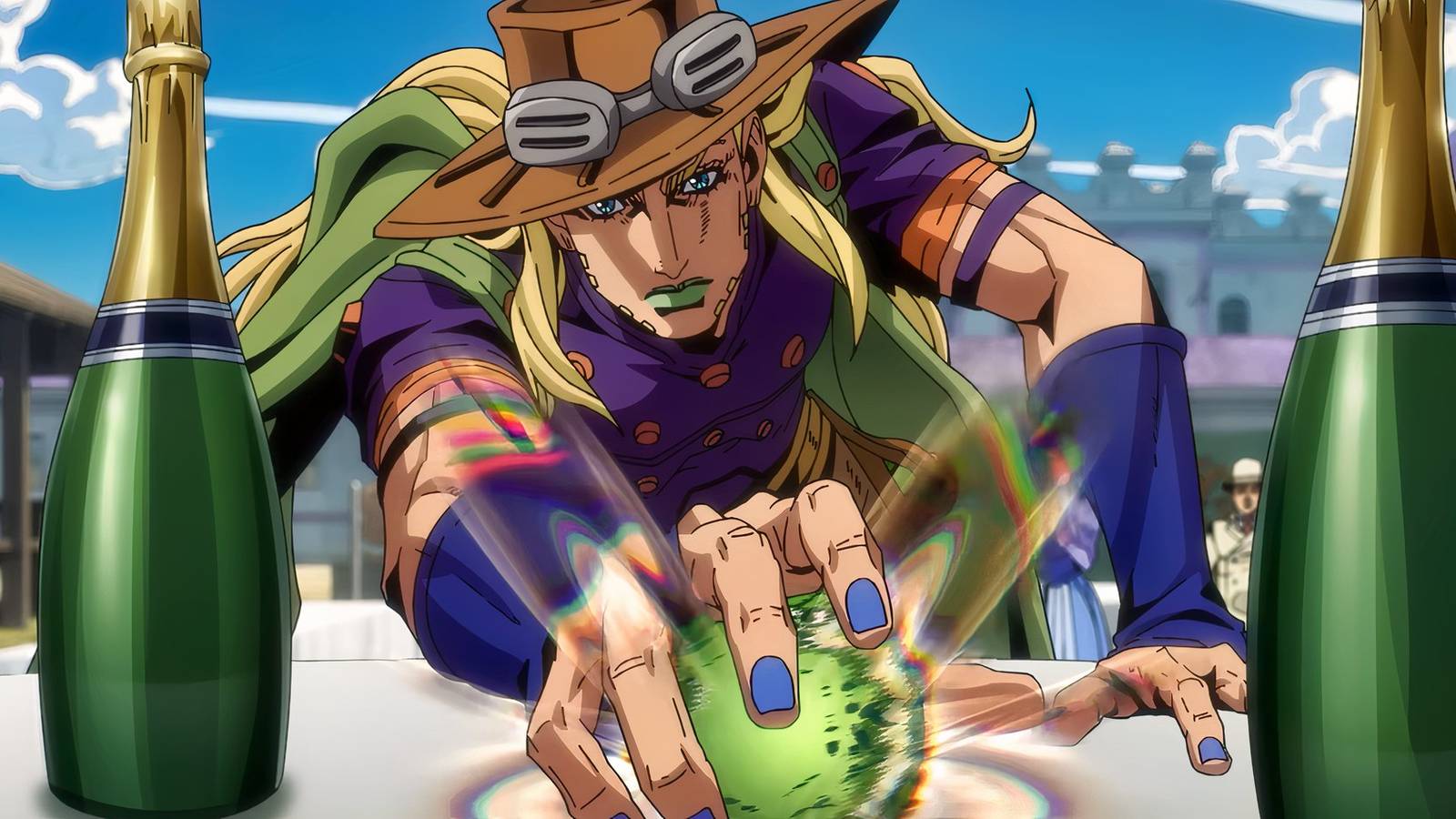
Hirohiko Araki’s Steel Ball Run, acts as a creative clean slate for Araki’s eccentric, larger-than-life world, as it revisits core concepts like Stands (the physical manifestation of a person’s fighting spirit) through the lens of a heart-thumping Spaghetti Western.

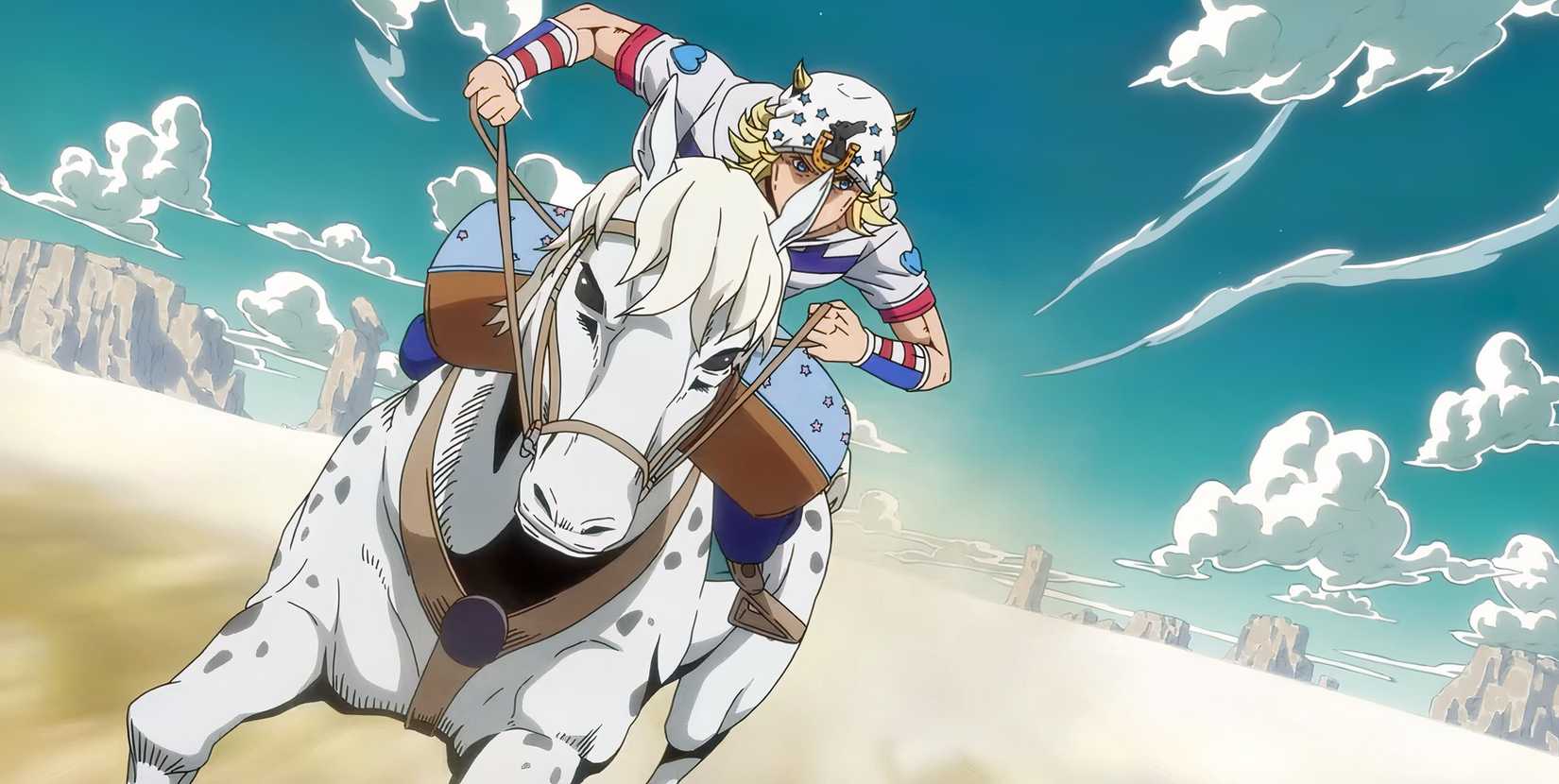 Image: David Production/Netflix
We've made a conscious effort in the art direction and color design as well, so that viewers can really feel that classic Western atmosphere on screen — the vast land stretching out to the horizon, the dry, dusty air, and the harsh, blazing sun.
You also directed episodes of JoJo's Bizarre Adventure: Golden Wind (season 5 of the anime series). Although Steel Ball Run shares core franchise concepts/elements with Golden Wind, the latest anime is essentially a creative clean slate. Are there any lessons learned from the Golden Wind experience that were valuable to shaping Steel Ball Run? How has the definition of "bizarre" changed between the two installments?
While keeping the core "JoJo-ness" unchanged and treasuring it, we've made small, incremental changes and updates to match the character of each part. As one concrete example, we changed our approach to color design for scene-specific tinting, and also changed where and how we use that scene tinting itself.
Horses are notoriously difficult to animate. Did you employ any special techniques or methods to animate the horses in Steel Ball Run?
Animation production is a collaborative effort, so if we build in a process so difficult that only certain staff members can handle it, that becomes a bottleneck, and the work itself ends up unable to be completed. The horse animation is one such example.
In this series, we put the movement and skeletal/sketch-like elements into 3D, while the surface-level elements that are actually visible on screen are hand-drawn. This lets us remove the stiffness of 3D while still achieving both the fluctuation and softness of hand-drawn animation.
We also turned the movements into assets as much as possible, so the animators don't have to worry about designing the sketches or movement themselves, which has allowed us to produce a large number of cuts.
That said, the design of the assets' movement itself is still done through hand-drawn animation, and since we draw them while mixing in a degree of intentional exaggeration — what animators often call "lies" — I think this lets us achieve a softness that's hard to get with 3D alone, along with a satisfying sense of movement as animation.
How do you feel about fan reactions since the 1st Stage began streaming on Netflix? Viewers are looking forward to the anime’s weekly release, using the phrase "JoJo Fridays. " We would love to hear some highlights from the upcoming 2nd and 3rd Stages.
We've been receiving a huge response, and it makes me really happy — honestly, it's also a bit of a relief. I'm truly grateful that so many viewers are looking forward to each week's release with the phrase "JoJo Friday. "
In the 1st Stage, we focused mainly on the excitement of the race itself, but from the 2nd Stage onward, the story really starts to move, and the Stand users begin to appear as well. Also, the mysterious Gyro's past and his relationship with Johnny will gradually start to change. Please look forward to seeing what kind of journey the two of them go on from here!
JoJo's Bizarre Adventure: Steel Ball Run returns on Sept. 25 on Netflix.