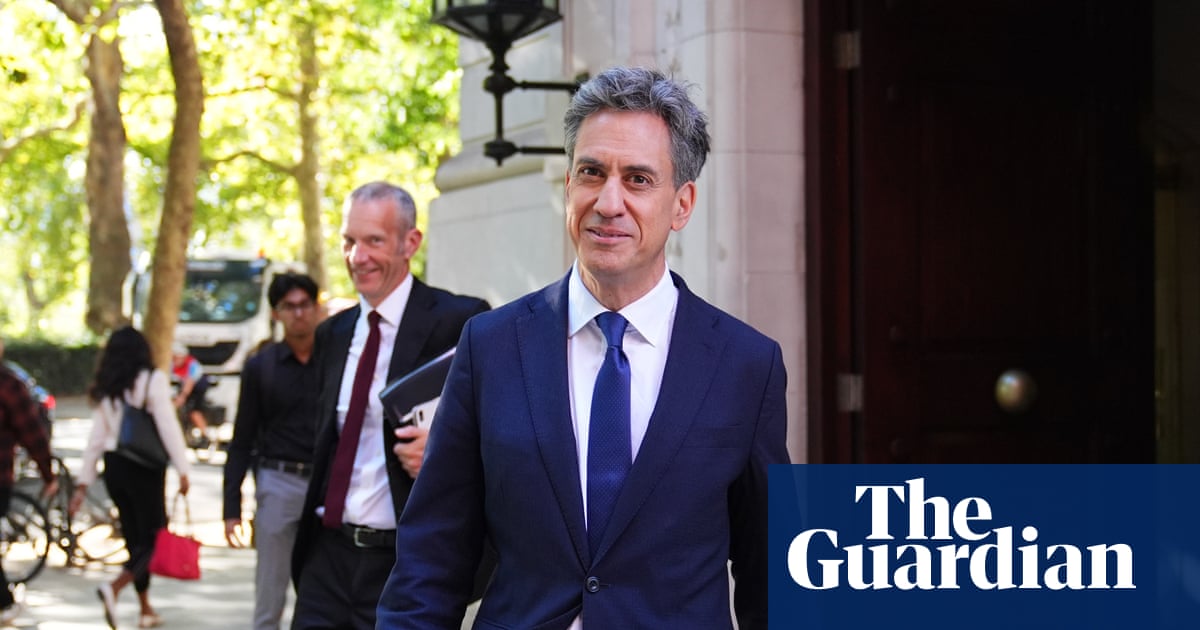
The foreign secretary announced sweeping sanctions on trade with Israeli settlements in the West Bank on Tuesday, with the government taking the position that Israel’s occupation of the Palestinian territory was unlawful.
The measures were coordinated with France, Canada and nine other countries who were also introducing sanctions on Israel over the increasing expansion of settlements that the UK government says is threatening the future of a Palestinian state.
In a joint statement leaders including Andy Burnham, Emmanuel Macron and Mark Carney said: “The time has come to take further action to uphold our commitment to protect the two-state solution, our interests and to stand up for our values, before it is too late.”
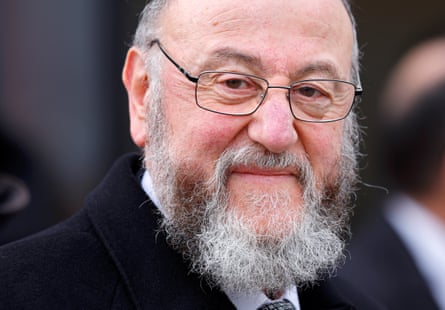
The chief rabbi, Sir Ephraim Mirvis, described the UK sanctions as a “dark day for British Jews” and warned they could embolden people who “use hatred as a weapon against Jews”.
Milliband, who describes himself as a “proud British Jew”, said he did not agree with Mirvis.
When asked on BBC Radio 4’s Today programme whether he was saying the chief rabbi was wrong, Miliband replied: “Yes, I am saying I don’t agree with the chief rabbi, somebody over whom I have great respect.”
Miliband added: “I just want to be very, very clear. As I said it in my statement yesterday, anyone who holds British Jews, or indeed Jews around the world, responsible for the actions of the Israeli government is engaging in antisemitism, pure and simple.
“And it must be possible to stand up in our society for British values of freedom, dignity, and against oppression and injustice, and do so as I believe I did yesterday in a way that calls out antisemitism.”
“No, I don’t agree with that,” said Miliband, adding: “Antisemitism is a scourge and an evil … I want Jews, I want people of all faiths and none to feel safe in our country.”
Tuesday’s sanctions announcement also prompted a swift backlash from Israel which ordered the closure of the British consulate in Jerusalem and banned 12 British MPs and activists from entering Israel.
Washington’s ambassador to Israel, Mike Huckabee, warned the US could take retaliatory action over trade, but the US secretary of state, Marco Rubio, said the US would “obviously” not follow the UK government’s actions but did not want to see the West Bank stabilised.
Miliband told Sky News he would “let our American friends speak for themselves” but insisted the international community had been “quite frustrated to put it mildly, with some of the actions of the Israeli government”.
The foreign secretary said he regretted what the Israeli government had announced but said he was “proud of what we did yesterday and it was the right thing to do”.
Miliband accepted the closure of the British consulate in Jerusalem would be “damaging” but said the government had “weighed up the costs and benefits in advance if this”.
The government is set to enact:
- An import ban on goods from illegal settlements in the occupied territories and a new ban for arms licences and other exports that “materially contribute to the occupation”.
- A comprehensive sanctions regime against providing services such as construction or financing for Israeli settlements and a ban on advertising them in the UK.
- Personal sanctions against key individuals accused of promoting settler violence.
- A new ban for arms licences and other exports that “materially contribute to the occupation”.
The prime minister, Andy Burnham, said the sanctions were “the right thing to do” and stressed they were aimed “not at the Israeli people”. Burnham is due to face MPs over this issue at prime minister’s questions.