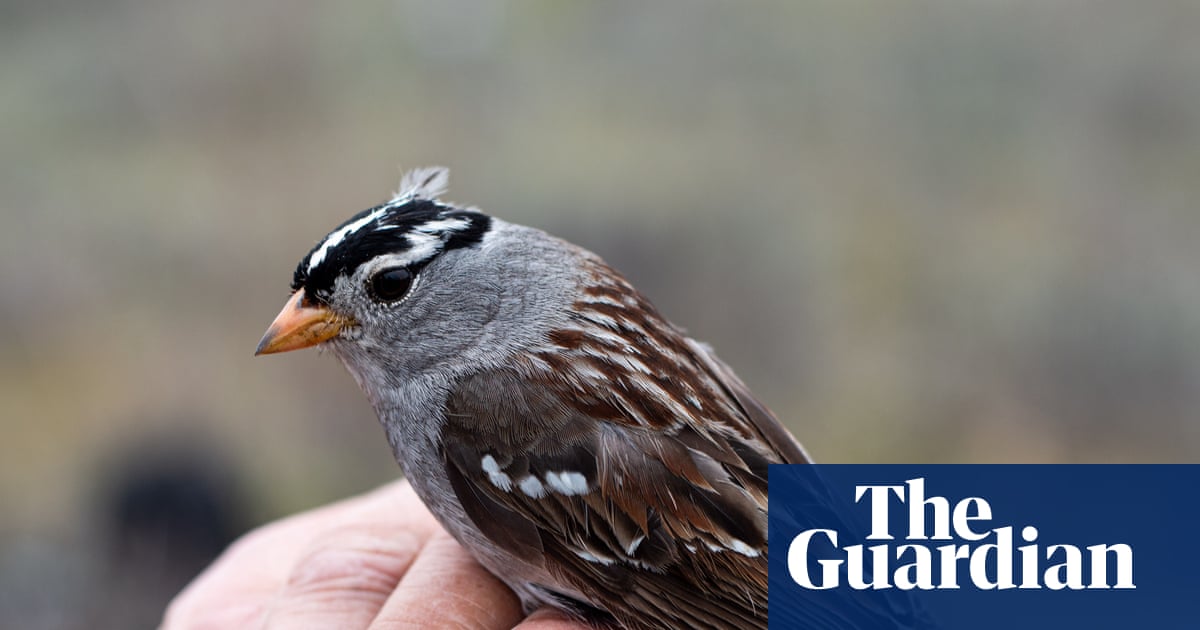
The Arctic summer is short-lived, and sparrows have only a few weeks to establish territories, find mates, lay eggs and raise their chicks on a steady diet of bugs. From every ensnared bird, the scientists collect blood, feather and faecal samples to see what they are eating and how that changes over the summer.
One thing they want to know is whether the sparrows are consuming a lot of stream insects, such as stoneflies and mayflies, says Ian Shuman, a doctoral student in quantitative ecology at Columbia University. As willow shrubs claim new territory along the Arctic’s rivers and streams – a process scientists call “shrubification” – this could disrupt the life cycles of stoneflies and mayflies. If the songbirds also depend on aquatic insects to thrive, that might affect the sparrows’ prospects.
The tundra can feel immutable in its vastness. A sea of grass and moss extends as far as the eye can see. But above the Arctic Circle, change is happening faster than anywhere else on Earth. Snow is melting earlier in the spring, sending torrents of water downstream. By late summer, such early season deluges have given way to parched creek beds. The Arctic grayling – cold water fish in the salmon family – that swim between deep lake winter refuges and shallow summer spawning streams may become stranded in isolated pools. Their survival, too, rests on the mayflies and stoneflies.
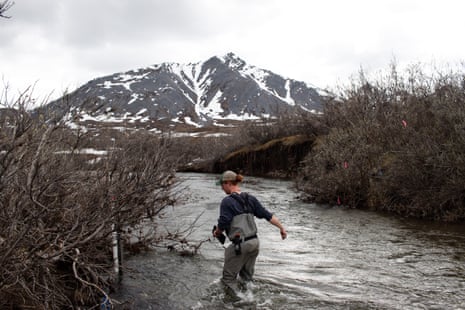
- Galbraith Creek on Alaska’s North Slope
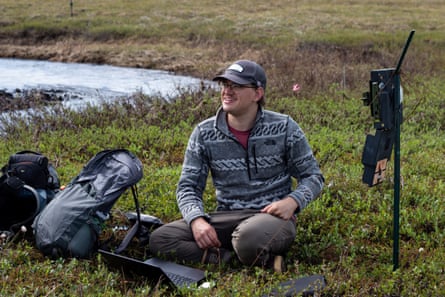
- Ian Shuman, a PhD student at Columbia University, downloads the data from an autonomous recording unit set up on the tundra of Alaska’s North Slope to listen for bird calls
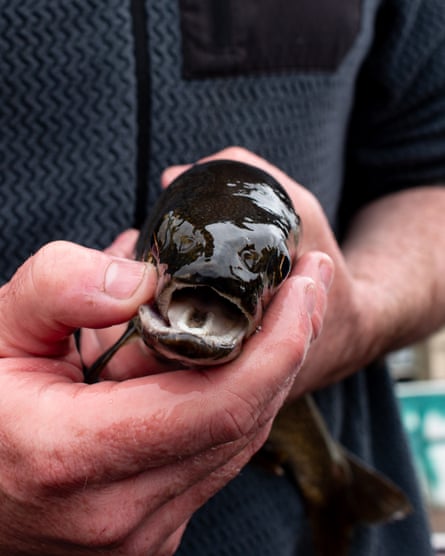
- An Arctic grayling, a freshwater fish in the salmon family, caught in Toolik Lake, Alaska
That’s the question evolutionary ecologists, biologists, physiologists and geneticists are trying to answer from Alaska’s stream and tundra ecosystems in a first-of-its-kind $15m (£11m) project, supported by the US National Science Foundation. Over six years, scientists will closely assess five species and their connections to one another: the white-crowned sparrow, the feltleaf willow, the Arctic grayling, an aquatic mayfly and a ground beetle (the exact species are yet to be determined). If species adapt in response to temperature, they may also adapt in response to each other – and each other’s adaptations.
“There is how organisms respond individually, but then all those organisms also live in a matrix that is an ecosystem,” says Linda Deegan, a senior scientist at Woodwell climate research center in Massachusetts who is leading the project, known as the Evolving Meta-Ecosystems Institute (Evome). “We think those connections will help them prosper in climate change. Things won’t completely fall apart.”
Scientists chose Alaska’s tundra and stream ecosystems to study, not only because the Arctic is the fastest-warming region on Earth, but because it is also home to relatively simple ecosystems where a handful of species shape the environment. Still, what they find in the far north will help inform how ecosystems around the world, from the tropics to the alpine regions, might be able to withstand the climate crisis.
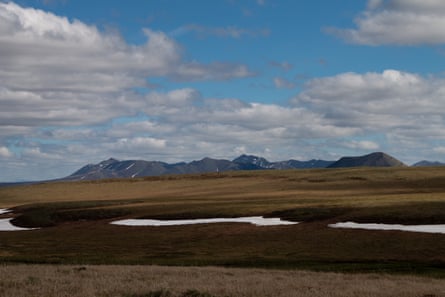
- The Brooks Range peeks out from behind the sprawling tundra of northern Alaska
It is impossible to walk very far on the tundra without stumbling across a research project tucked into the willows or sedges. Dozens of sticky traps poke out of the permafrost to collect bugs. Recording boxes listen for bird calls. Temperature sensors lie submerged in frigid streams. Mesh bags flap around on the tundra to gather willow leaves. In the distance, the silver Alyeska pipeline cuts through the rugged terrain, transporting crude oil to Valdez – a reminder of why scientists are here in the warming landscape.
“We follow the road and the pipeline all summer,” says Andie Norton, a Woodwell research assistant who is studying the impact of encroaching willows on nutrient flows in Alaska’s streams.
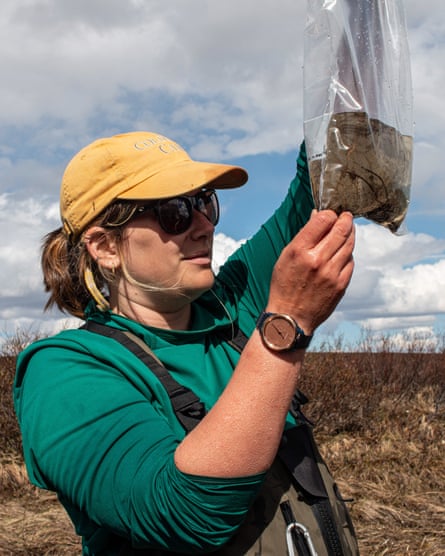
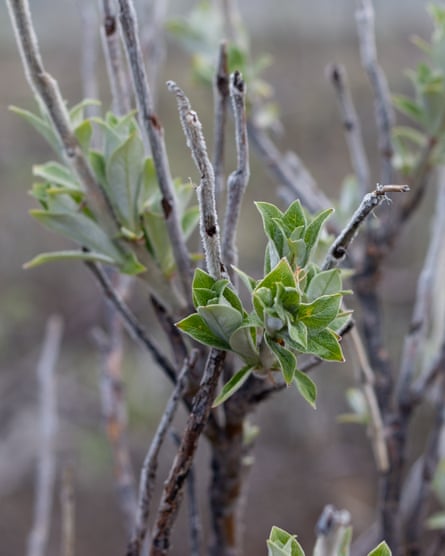
- Andie Norton, an ecologist with Woodwell Climate Research Center, examines a water sample taken from Alaska’s Hershey Creek for aquatic mayflies and stoneflies, and a feltleaf willow, one of Evome’s main study species, in the early stages of leafing out
Still, there is good reason to think that Alaska’s stream and tundra ecosystems will continue to function, Deegan says, though she notes such an optimistic outcome is only a best guess. Few studies have looked at how adaptive evolution can affect entire ecosystem dynamics – including nutrient and energy flows – and none have assessed how evolution could affect connections between two adjacent ecosystems.
Individual species can adapt to a warmer world in one of three ways. They can adjust their behaviour, such as birds shifting their migration routes. They can acclimatise at the physiological level, for instance trees temporarily altering photosynthesis during a drought. Or they can draw upon evolution – passing on genetic changes to their offspring, sometimes within just a few generations.
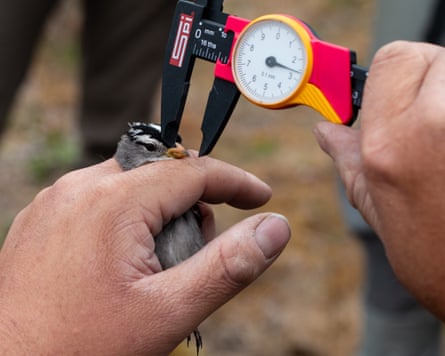
- Scientists measure the beak length of a newly arrived, migratory white-crowned sparrow on the tundra of Alaska’s North Slope
“Across hundreds of experiments, we have seen this happening,” says Mark Urban, an evolutionary biologist at the University of Connecticut working on the project. “There is this incredible buffer ability of adaptive evolution.”
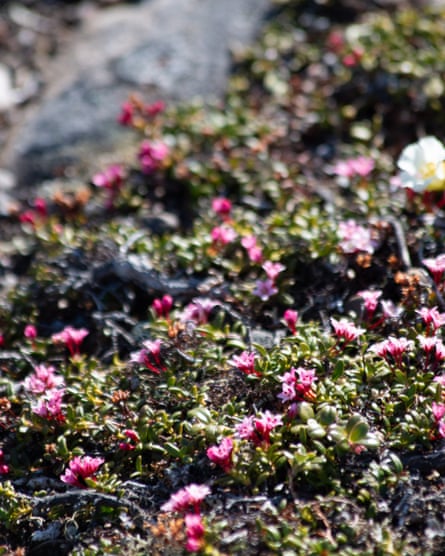
- Alpine azalea, a common dwarf shrub found on the Alaska tundra
To get a better idea of whether the Arctic’s stream and tundra habitats will continue to prosper, scientists are mapping the genetic diversity of each of the five study species to see if there is enough to allow for adaptation – influencing the ecosystems’ resilience potential.
“We can get so far with ecology, but at some point we want to get down to the basics of why organisms do the things they do, and can they change the things they do,” says Urban. “That’s something only genetics can explain.”
Certain genes control the traits associated with succeeding in different environments. “The holy grail in genomics is to find that one gene that affects everything. The gene that rules them all,” he says. “I think that’s optimistic. Most of the traits are going to be determined by hundreds of thousands of genes.”
The Arctic grayling is, in many ways, the crown jewel of the scientists’ investigation. The migrating fish – distinguished by its iridescent body and flamboyant dorsal fin – connect Alaska’s watersheds, moving nutrients between streams and lakes. They are also exceptionally vulnerable to changes in the climate. Grayling require cold water to develop into adults. They feed on the stoneflies and mayflies likely to be affected by increased shrubbiness. And unpredictable summer stream flows can block their movement back to winter lakes.
“The snow is melting earlier most years, but summers are also getting drier and grayling have to move,” says environmental ecologist Chris Neill, also at Woodwell, who is looking at stream flows, water chemistry and plant communities for the project. Certain cues tell grayling when they should begin migrating. “Those cues may be programmed into their genome – or they may not.”
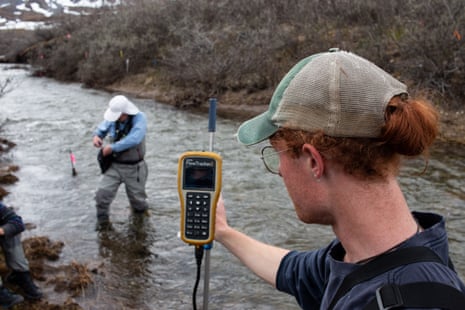
- Harrison Dubois and Chris Neill, members of the Evome project, measure the late spring stream flow of Galbraith Creek on Alaska’s North Slope
Things only got harder from there. The students had hoped to transport their bounty back to a laboratory on the university campus along the notoriously bumpy Dalton Highway. More than half of their eggs perished en route.
The survivors that made it to Fairbanks were placed into four tanks with five different water temperatures ranging between 4C and 20C. At the same time, the students collected fertilised eggs from a channel of the Chena River a few miles outside Fairbanks, where grayling were spawning at just 4C – six degrees cooler than the grayling up north – and transferred them to the tanks.
The idea is that by collecting species from different geographies and growing them together under shared conditions, scientists will be able to see how genetic variations and adaptations differ across the Arctic. “Temperature is really controlling how quickly things develop,” says Ponce Velez. “There are a lot of trade-offs. At higher temperatures, we have much quicker development of fish. But we have really high mortality.” Next year, they’ll gather more fertilised eggs from other lakes and streams spread across the North Slope to see how each population fares in the lab.
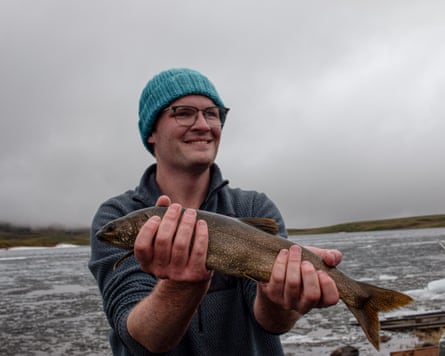
- Matthew Zimmerman, a PhD student at the University of Alaska Fairbanks, holds up an Arctic grayling caught in Toolik Lake
Will Alaska’s streams and tundra bounce back, bend, or snap entirely? “I think there are going to be a lot of springs,” says Urban. “But we’ll also witness a few breaks or bends in the system.”
Find more age of extinction coverage here, and follow the biodiversity reporters Rebecca Ratcliffe, Phoebe Weston and Patrick Greenfield in the Guardian app for more nature coverage.