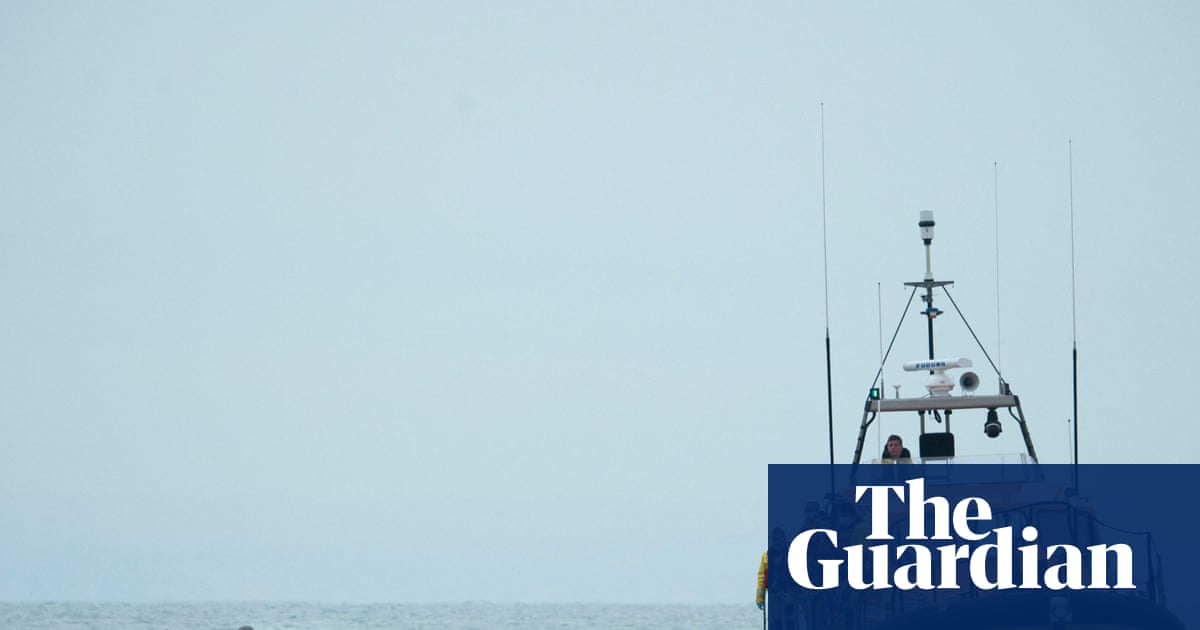
RNLI bosses said workers had been subjected to online and physical abuse and there had been “baseless” rumours that the charity has housed asylum seekers or moved them to secret locations after helping them to shore.
The charity stressed that responding to small boats was only a tiny percentage of its work and updated its webpage explaining its work in the Channel, which includes powerful testimonies from volunteers involved in the operations.
RNLI staff and volunteers have been put in the spotlight over the charity’s involvement in a rescue on Sunday in which it a dinghy carrying asylum seekers was brought into Portsmouth, triggering protests by far-right agitators and local people.
Peter Sparkes, the RNLI chief executive, said that for more than 200 years the RNLI had rescued people without judgment, fear or favour. “Yet [staff and volunteers] and their families are being threatened by those who would hide behind a balaclava or a keyboard. Their action, in contrast, is wholly unacceptable in a civilised society.”
Sparkes said rumours that the RNLI housed asylum seekers on its premises, or that there were RNLI missions to move migrants to secret locations were “completely baseless and untrue”.
The RNLI also said almost 95%, of those who crossed the Channel in small boats last year were picked up by the UK Border Force.
One of the testimonies on the RNLI’s small boats webpage came from Dan Sinclair, a volunteer helm at Walmer lifeboat station in Kent. He said: “One thing I would like people to understand is that these people genuinely need our help.”
Speaking about one rescue in the Channel, he said: “We launched to an overcrowded, unseaworthy small boat that was taking on water. One family was so scared. They were screaming. Their boat was sinking in front of their eyes. It was a horrible, horrible situation.
“We managed to rescue that family. We stopped them from drowning. There was a little girl on the boat. She looked me straight in the eye and said: ‘I love you, thank you.’ As a father, that went straight to my heart. That rescue cemented in my head that what we are doing as an organisation is exactly the right thing.”
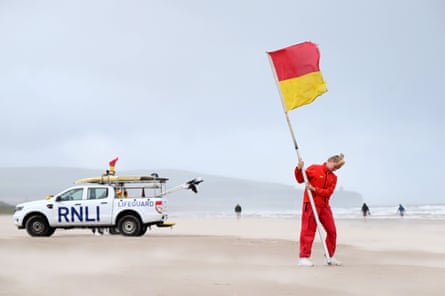
“There was this man holding on to the edge of the boat. He had no strength left. I leant over, lay on my front and I grabbed his arms, and he had no strength to hold me. I looked into his face and his eyes were wide, his face was grey. He was so scared.
“I just knew that if I let him go, he wouldn’t be there. I also knew that there was absolutely no way I was going to let him go. I held on to him and I called for help from my colleagues, and together we pulled him to safety.”
The charity said it responded to small boats in the Channel when HM Coastguard reported that people might be in danger at sea.
“The RNLI is one of several declared search and rescue capability providers and, under long-established procedures, RNLI volunteer crews respond to anyone at risk of drowning, regardless of who they are or how they came to be in difficulty.
“The men, women and children who find themselves in distress and sinking in one of the world’s busiest shipping lanes are no exception. Our crews will go to their aid today when tasked, just like generations of lifeboat crews have done before them, in wartime and peace.
The charity rejected the accusation that it was a “taxi service” for asylum seekers. “We are not. HM Coastguard coordinates maritime search and rescue operations around the UK. Our lifeboat crews are tasked to assist people who are in difficulty, both in the Channel and around the coast of the UK.
“RNLI crews launch to the rescue, doing everything they can to save lives, without any thought to where the people they rescue are travelling from, nor their migrant status.”