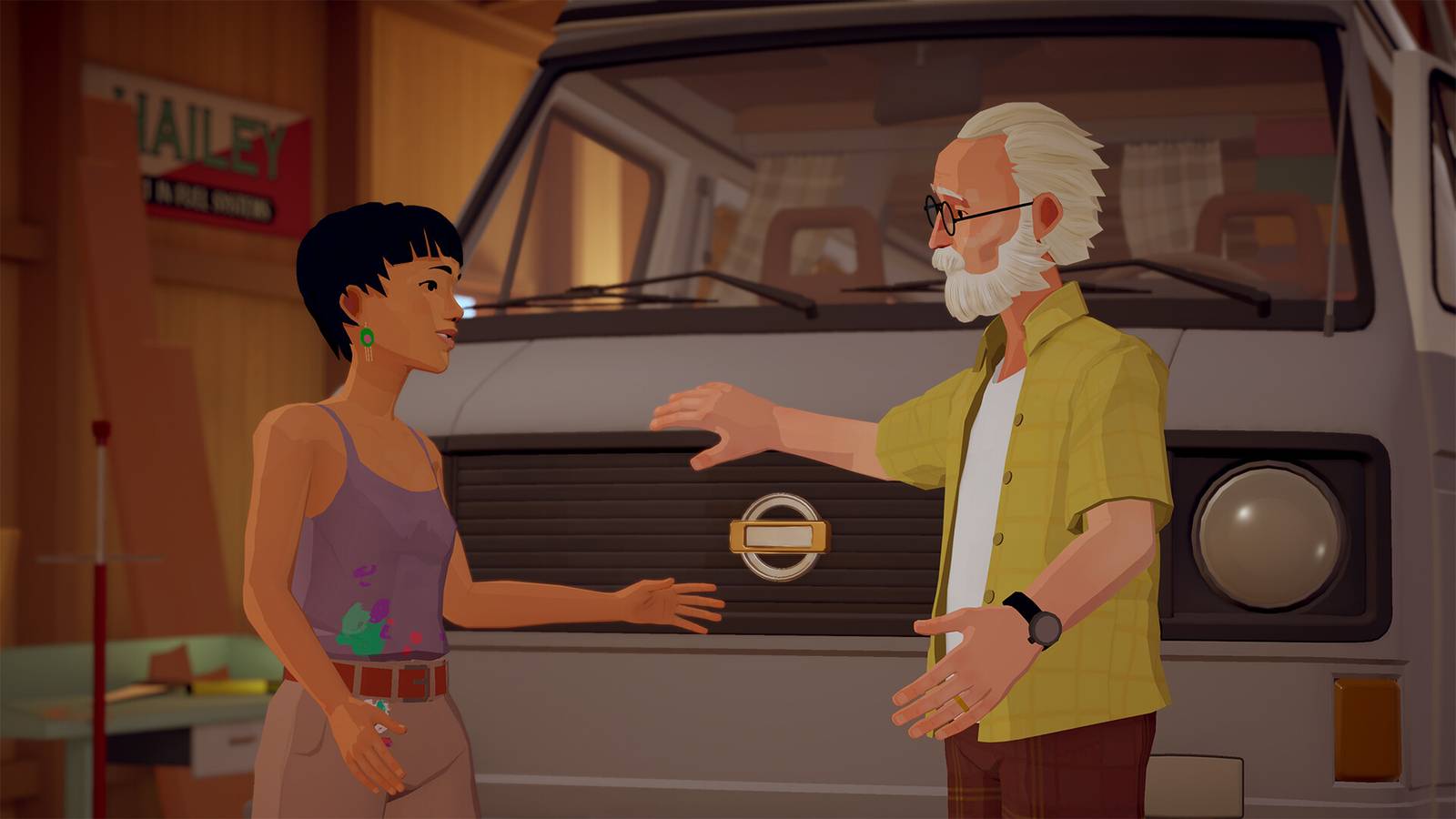

The flowers are gone, their broken petals scattered around the parking lot all that remains of them. Alfred picks some up and recalls snippets of the past.
The diner is less comforting. The aesthetic is all wrong. The booths have changed. The jukebox records don't work — they're just for decoration, one of the annoyingly young employees tells Alfred. Worse still, the booth, their special booth, is part of a blast-from-the-past special membership. You wanna eat there? Join the club.
Alfred didn't want to eat there. He doesn't really want to do any of this stuff. He loved his wife, but her absence left him trapped in an emotional netherworld. I appreciate Third Shift's more nuanced approach to nostalgia here. It might be a tried marketing trick, and easy to scoff at as a result, but studies have shown nostalgia's effectiveness in helping treat anxiety and depression. Alfred desperately needs that comfort as much as he needs to move on. But he can only grab at shreds of the past before uncaring modernity rips them from his hands. He's left alone and unmoored to anything substantial or comforting, an invisible wanderer drowning in his isolation. Moving on often isn’t as straightforward as we’d prefer it to be.
That context makes the rest of the demo, and the promise of Alfred's full journey, much richer and more promising. He travels away from the motel and gets caught up in other people's lives as he mentally revisits milestones from his relationship with Audrey. Here, too, Third Shift seems to be aiming for something more ambitious than your usual "tug-the-heartstrings" story. Yes, Alfred learns to rejoin the human race and enjoying what's left of his life. Yes, he finds strength in his past as he turns it into a lens through which he can view the present. He's coming from such a broken place depicted with surprising sensitivity and understanding, though, and that makes me very eager to see the route Alfred's journey eventually takes.
Forever Ago is