The Maharashtra Charity Commissioner has closed the inquiry into the 1989 transfer of 833 Tata Sons shares by the Navajbai Ratan Tata Trust (NRTT) to Naval H. Tata, observing that the transaction “was made in full compliance with the provisions of law then in force”, effectively drawing the curtains on a dispute over the share transfer that dates back more than three decades.The share transfer was raked up in recent months as a fight for control broke out among stakeholders in the Tata universe, and was seen as a move to embattle Tata Trusts chairman Noel Tata, as the matter related to the shares he inherited, according to complainants. This decision will come as a relief to Mr Tata, who is set to consolidate his control over the business empire with chairman N Chandrasekaran having announced his decision to move on at the end of his term early 2027.In an order dated September 2, reviewed by ET, State Charity Commissioner Amogh S. Kaloti said the Trust had established that the sale was necessitated by tax considerations, was backed by proper documentation and valuation, and complied with the laws applicable at the time.133724014Also Read: Tata Sons succession search stalls as regulatory hurdle blocks Trusts’ nomineeThe order, however, does not lift the restraint imposed by the state regulator on the Sir Ratan Tata Trust (SRTT). In May, the Charity Commissioner had issued the restraint under Section 36A(1) of the Maharashtra Public Trusts Act following complaints regarding the composition of the SRTT board and alleged non-compliance with Section 30A(2) of the Act, a critical area that deals the permissible number of perpetual or life trustees on the board. A recent amendment to the law introduced a statutory cap on the number of perpetual trustees who can serve on a public trust board.The Charity Commissioner found that the 1989 decision to sell the shares was neither sudden nor arbitrary. The Trust had begun considering a possible sale as early as 1984 after an amendment to the Income Tax Act threatened the tax-exempt status of charitable trusts holding securities that were not among the prescribed investments.The Central Board of Direct Taxes subsequently declined to recognise NRTT as a national trust in November 1988, exposing the Trust to tax liabilities on its Tata Sons shares.“… Existence of necessity is a question of fact. Therefore, it must be viewed in the context of the facts and circumstances of the relevant time. This Authority finds that the stand of the NRTT that the transfer of shares was necessitated by an external statutory compulsion which threatened the tax-exempt status and corpus of the Trust is well founded and can therefore be accepted,” the order states.Also Read: Tata Sons AGM deferred for lack of quorum, first in group’s historyAccording to the order, the Trust’s records showed a potential tax liability of Rs 4.23 lakh for assessment years 1986-87 to 1988-89 alone. The Charity Commissioner said the need to dispose of the shares arose to avoid the tax liability and preserve the Trust corpus.The order also attaches significance to the fact that Naval Tata had resigned as a trustee of NRTT with effect from January 1, 1988. The Charity Commissioner noted that the resignation was formally reported to the Assistant Charity Commissioner and the change report was accepted in February 1990.The proposed transaction was subsequently examined by eminent lawyer Nani A. Palkhivala. In his December 1988 opinion, Palkhivala concluded that there was no legal bar on Naval Tata purchasing the shares as he was no longer a trustee. He advised that the sale take place after a year had elapsed from his resignation and recommended restrictions to ensure that the shares remained within the Tata family.The shares were valued at Rs 1,914 each, based on the valuation adopted for wealth-tax purposes. Naval Tata subsequently agreed to purchase the 833 shares at that price and accepted conditions restricting their transfer outside the family.The transaction was formally completed on January 18, 1989. The share transfer form recorded total consideration of Rs 15.94 lakh, while the Trust’s balance sheet showed a profit of Rs 8.15 lakh from the sale. The Charity Commissioner noted that the transfer had also been approved by the Tata Sons board and was supported by the requisite documentation.In its final findings, the Charity Commissioner said NRTT had established all five key elements examined in the case: that the sale was driven by the tax situation prevailing at the time; proper documentation existed; the consideration was based on an established valuation and resulted in a profit for the Trust; restrictions ensured that the shares remained within the recipient’s family; and the transfer complied with the law then in force.Importantly, the order also leaves the door open for former Tata Sons chairman Ratan Tata’s will to be challenged, as it establishes the primacy of an undertaking by his father Naval Tata during the time of the original share transfer that his children would not transfer it outside of the Tata family. “Trustees of NRTT are at liberty to take appropriate steps, if it is found that late Mr. Ratan N. Tata has bequeathed his shares equally to some other charitable institutions in breach of the conditions attached to the transfer of shares and the express undertaking by Mr. Naval H. Tata that his children would transfer or bequeath the shares to their own relatives and not to a third party,” the order states.The Charity Commissioner has also mentioned that the Trust has alleged that Singh’s conduct had damaged its “reputation and good will” and described his actions as “unbecoming of a Trustee of NRTT”, questioning his decision to first approve the legality of the 1989 share transfer and then, two days later, seek an independent inquiry into the very same transaction.“….It is very surprising, to say the least, that Mr. Vijay Singh on 8th June agreed in the meeting of the Board of Trustees that the share transaction was legal and valid, and on 10th June questioned the legality and validity of the very same transaction, which was widely reported in the newspapers. It is stated in the NRTT’s reply that the said e-mail of Mr. Vijay Singh is not available with the Trust, which indicates an intention on his part to suppress this from the other Trustees and the Trust as a whole. This action on his part has resulted in damaging the reputation and good will of the Trust. In that sense, conduct of Mr. Vijay Singh was unbecoming of a Trustee of NRTT,” the order states.The controversy surrounding the 1989 transfer had intensified after Tata Trusts Vice Chairman Vijay Singh wrote to the Maharashtra Charity Commissioner seeking an independent inquiry into the transfer of shares from NRTT to late industrialist Naval H. Tata, saying, “Since Mr Noel Tata, a direct beneficiary of the share transfer, is presently Chairman of the Tata Trusts, it could be inferred that a denial authorised by him does create a conflict-of-interest situation, without casting any aspersions on anyone,” the letter stated.The request followed a legal notice received by Singh alleging that the transaction amounted to an illegal alienation of public charitable assets into private hands.Suresh Tulsiram Patilkhede, represented by advocate Katyayani Agrawal, alleged that the share transfer took place on January 18, 1989, a week after Naval Tata resigned as a trustee of the Trust. According to the representation, the transfer lacked legal necessity, was not supported by a valid instrument of transfer and was carried out without consideration, rendering it unlawful under principles governing public trusts.The Trusts then had categorically denied any suggestion of impropriety on the part of the Sir Dorabji Tata Trust, Navajbai Ratan Tata Trust or any of the parties involved in the transaction.
India
1 views
Win for Noel Tata in 37-yr old share sale case
The Maharashtra Charity Commissioner has closed the inquiry into the 1989 transfer of 833 Tata Sons shares by the Navajbai Ratan Tata Trust (NRTT) to Naval H. Tata, observing that the transaction “was made in full…
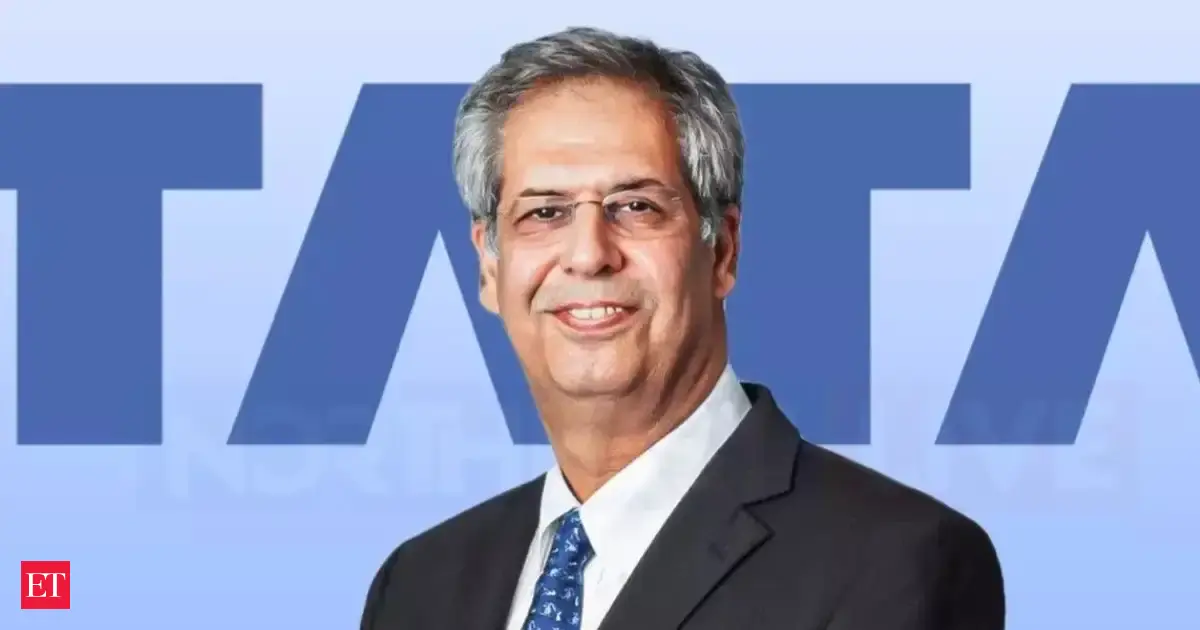
The Maharashtra Charity Commissioner has closed the inquiry into the 1989 transfer of 833 Tata Sons shares by the Navajbai Ratan Tata Trust (NRTT) to Naval H. Tata, observing that the.
Economictimes Verified Source
Syndicated via official news feed
Explore all India stories
Syndicated feed content with full publisher credit.
India Desk
More in India
Continue reading verified coverage and related developments on this desk.
More from India
Latest developments and reports from the desk
INDIA
'Like a thanedar': As Satyendar Jain gets bail, Arvind Kejriwal targets PM Modi
A Delhi court granted bail to former minister Satyendar Jain in a corruption case. Kejriwal criticized the Centre, stating Modi only arrests people. Bharadwaj also condemned the arrest, calling it unnecessary…
INDIA
'When there is business, there is CEO': Raut flags corporatisation of Ram Mandir
'When there is business, there is CEO': Raut flags corporatisation of Ram Mandir
INDIA
Stock markets extends losing streak to 4th day; Sensex slides 417 points amid rising crude, IT sell-off
The 50-share NSE Nifty slipped 41 points, or 0.17%, to settle at 23,873.45