
These warnings were issued over the past 48 hours on both sides of the Atlantic about the potential impact of a technology that most people still think of as a more talkative search engine.
Some of the threats were raised in Westminster as MPs and peers began to wrestle with the danger of AI outperforming human capabilities. The nuclear warnings came from Des Browne, who is a former defence secretary, and Prof Stuart Russell, an eminent Berkeley computer scientist.
Beatrice Fihn, who won the 2017 Nobel peace prize for leading the International Campaign to Abolish Nuclear Weapons, told parliamentarians: “It is not the first time we’re confronted with abilities that could end up killing us all.”
The session on Monday was convened by Control AI, a lobbying group pushing for international regulation of the technology. It is backing a bill tabled in parliament this week by the Labour MP Alex Sobel and aimed at banning the creation of artificial superintelligence (ASI).
On Tuesday night, a senior employee at Anthropic admitted he believed there was a greater than 10% chance the technology could “kill all humans” in the next decade and warned that his AI company did not have a plan to ensure ASI was aligned, meaning it did no harm. Predictions for when ASI might be reached vary from several years to more than a decade.
Evan Hubinger, alignment science lead at Anthropic, posted the comment after Jacob Coxon, a 28-year-old researcher at the San Francisco company and previously at OpenAI, resigned, claiming “neither company was acting responsibly”. He said they were “gambling with our lives”.
Coxon said the risks at Anthropic were well understood but they were “locked in a race to get there first”. In a glimmer of hope, he added that he was optimistic about the potential for coordination between US labs on pacing their progress in the race.
Anthropic has been approached for comment on the issue. OpenAI pointed to a statement from its chief scientist, Jakub Pachocki, who said last week: “International coordination on future AI development needs to become a top priority for governments around the world.”
The push for wider coordination to control ASI was at the heart of events at Westminster this week. According to the Financial Times, government officials voiced concern that Anthropic had declined to submit its latest model – Mythos 5.1 – to the UK’s AI Security Institute for pre-release testing.
Only a few US organisations have had access to Mythos 5.1, the Cabinet Office confirmed. A spokesperson added: “The AI Security Institute continues to collaborate closely with industry partners, including Anthropic.”
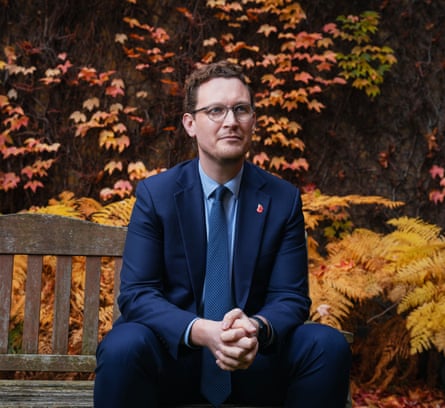
Citing Coxon’s resignation, Jones added: “The debate ranges from the end of humanity to claims of ‘marketing hype’. Either way, governments must now step in.”
On the other side of the Atlantic, Bernie Sanders ratcheted up his AI safety campaign this week by again calling on Congress to regulate the technology. He pointed to polling suggesting that 81% of Americans believe their politicians should take action.
The independent senator for Vermont said: “We can’t allow a handful of greedy people to play God and determine the future of humanity – our economy, environment, democracy, privacy and more – without public input.”

Despite being an early investor in Anthropic and Google DeepMind, two of the leading AI labs, Tallinn estimates that 10-15% of AI employees believe the technology will be a worthy successor to humanity.
He said in an interview earlier this summer: “A fairly known AI researcher said to me ‘Jaan, don’t worry about this. Humans are a disposable species’. From what I understand he was fine with becoming extinct.”
Tallinn’s lobby group ran the session for MPs and peers at Westminster on Monday and urged them to back measures to curb the most powerful AI models. On every chair was a copy of the book, If Anyone Builds It, Everyone Dies: The Case Against Superintelligent AI.
The politicians heard from Russell, who made the Chornobyl warning and said: “The other possibility is a much larger catastrophe, in which humanity loses control irreversibly. But we have no say over whether we continue to exist.”
Browne said that when he was defence secretary he thought nuclear war was the most likely threat facing humanity. Now he believed “a superintelligent AI poses a threat on the same, possibly, a greater scale”.
David Barber, director of Sofair, a state-backed AI research lab combining academics from Oxford, Cambridge, Edinburgh and UCL, said he was worried about people “throwing the baby out with the bathwater”.
“AI is not going to go away,” said the professor. “It’s incredibly useful whether or not you allow it in a fully unconstrained way to access the internet and various systems that’s potentially problematic. We may need to learn how to better control these things. There are vulnerabilities in the software frameworks that need to be patched. But that’s doable.
“What we need as a country is to get to grips with the duality that is both an incredibly important and useful technology, and at the same time, it’s something that needs to be carefully thought about and carefully controlled.”
Sandra Wachter, a professor at the Oxford Internet Institute, said she did not believe in “Terminator scenarios” but said AI posed real threats including its environmental impact, spreading of misinformation and replacing jobs.
“These problems are real and urgent and need addressing now,” she said. “Terminator scenarios are a big distraction from real issues.”
Gary Marcus, an AI industry commentator and academic, said: “There is a difference between superintelligence that is aligned (if such a thing is possible) and superintelligence that is not.
“It is at least conceivable that the former might be net positive. So far we have neither, but a superabundance of hype combined with a striking lack of prudence on OpenAI’s part has gotten us where we are, with intense mistrust all around.”