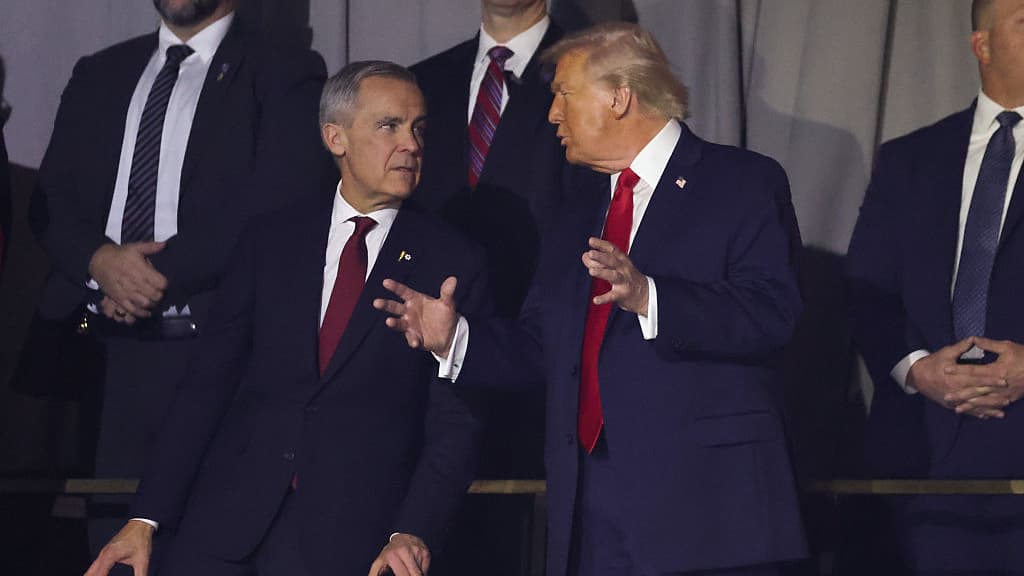
The Trump Administration has levied impacting products such as dairy and steel.
Experts point out, though, that the goods being affected by the tit-for-tat tariffs make up a small portion of the overall trade between the two countries. The U.S. tariffs, for instance, are impacting about 5% of the that the U.S. exported to its northern neighbor in 2025.
How will the tariffs impact American and Canadian consumers?
Tariffs are a tax on imported goods that is paid for by the importer. But that cost can ultimately Despite that, there is conducted for Global News found that more than 70% of Canadians said they backed the Carney government’s move to enact counter tariffs on U.S. imports, and more than 60% said they agreed with the decision to walk away from the negotiation table “even if it meant higher costs and job losses.”
By contrast, a majority of Americans—nearly 60%—said they opposed the U.S. implementing additional tariffs on Canada, according to the findings of an by the Canadian nonprofit Angus Reid Institute found that nearly 70% of Canadians felt that Carney showed “strength” by rejecting a “bad” trade deal with the U.S.
Clausing contends that Carney is “immensely popular” with his constituents because he’s pushed back against recent comments Trump has made threatening Canadian sovereignty, which have angered many Canadians. While Trump’s , with 53% of Canadians holding a positive view of their Prime Minister, according to data shared by the polling firm Abacus Data.
“Even though the retaliatory tariffs will ultimately hurt them, I think the Canadians are willing to withstand a fair amount of pain, in part because they view the stakes as very large,” Clausing says. “In contrast, I don’t think Americans have a beef with Canada … so I don’t think the American consumers are going to be as willing to endure pain.”
Tensions continue to rise between the U.S. and Canada
Tensions between the U.S. and Canada have an Executive Order that instructed his Interior Secretary to rename Lake Ontario to . Over the weekend, Trump to Carney as the “governor of Canada” in the past—rhetoric that seemingly undermines Canadian sovereignty, similar to the times when Trump has “I think one feature of the U.S.-Canada trade war so far has been that the rhetoric has been larger than the impact,” Clausing says. “So far, the damage has been limited, but it’s still real. I think even the rhetoric around this trade war has really diminished Canadian interest in doing business with the United States.”
“It’s difficult to overstate how upset Canadian people and businesses are by this situation and by these threats to their sovereignty,” she continues.
Morrow says he’s concerned that the rising tensions between the two countries make it seem likely that they are “inching towards a scenario of escalation.”
“At some point, there’s going to have to be an offer—there’s going to have to be an off-ramp,” Morrow says. “I don’t see that off-ramp right now, and that’s what makes me most concerned.”