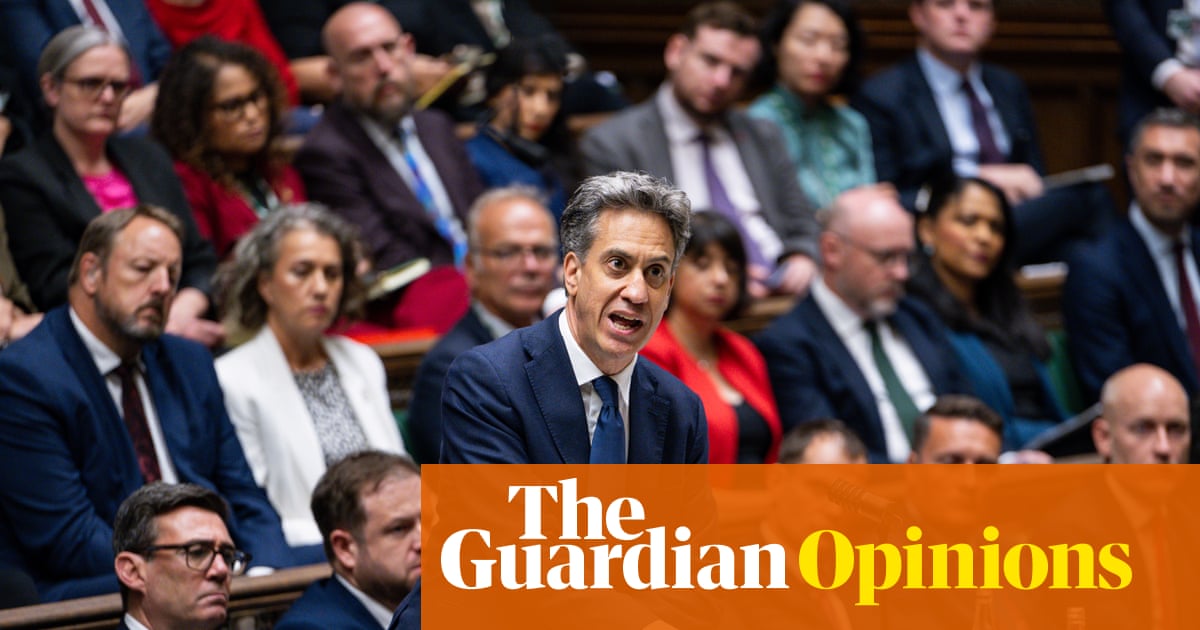
Rarely in recent years has the Commons felt like the cockpit of history. On Tuesday it did. The foreign secretary, Ed Miliband, placed Britain at the head of a 12-country coalition considering economic restrictions on Israel’s illegal settlements, with the UK, France and Canada committing to national trade bans.
The move comes after escalating numbers of attacks by Israeli settlers against Palestinian villages in the West Bank. International opinion seemed to shift decisively after Israel gave the go-ahead for 1,200 homes in the E1 settlement that would cleave the West Bank into two – using illegal settlements to bury Palestinian statehood for good. Mr Miliband added that evidence of war crimes in Gaza was mounting, making the overdue case for Britain to recast its economic and military relationship with Israel.
Mr Miliband, who is Jewish and lost more than 60 relatives at the hands of the Nazis, declared himself to be a friend of Israel. But clearly he thinks friends should talk straight to each other. Mr Miliband has delivered perhaps the toughest official British indictment of Israeli conduct in recent history, declaring that “ethnic cleansing” is taking place in the West Bank and accusing members of Israel’s government of supporting forced displacement.
Probably the most consequential move by Mr Miliband is to formally declare the occupation of the Palestinian territories unlawful, in line with the international court of justice’s 2024 opinion. The import ban logically follows. But private acts will have to change too. British companies could soon have to ask whether they are profiting from – or helping to sustain – an illegal occupation.
To emphasise this point, the foreign secretary also promised to take action against those providing construction, infrastructure and financing services, because a goods-only ban would leave untouched the commercial activity sustaining unlawful settlements. He also committed to target extremist settlers and to refuse to license arms sales that “contribute to the occupation”. By simultaneously sanctioning Iran and Hezbollah, the UK is signalling that it recognises the threats Israel faces while opposing its illegal actions.
No one can accuse Mr Miliband of ducking a fight. His statement will be pored over by the Trump administration, which has supported Israel’s prime minister, Benjamin Netanyahu. Being part of an international coalition will help to shield Britain from US ire. However, Mike Huckabee, the US ambassador to Israel, warned that some US states such as Florida could impose penalties against foreign governments deemed to be boycotting Israel.
Britain’s intervention comes in the midst of an Israeli election campaign. Opinion polls give neither Mr Netanyahu’s far-right coalition nor the opposition a sustained lead. Israel’s president, Isaac Herzog, a figure expected to be above the fray, absurdly claimed that Mr Miliband was interfering in the elections – as if the campaign itself could excuse ethnic cleansing. Israel closed the UK consulate in Jerusalem as a first response.
Tuesday’s announcement deserves a welcome. Mr Miliband has been characteristically brave. But the test is not what he said, but what he enforces in the weeks and months ahead. He promises a “sanctions regime” to take action against “companies and individuals” aiding settlements. Britain has accepted the principle that it must sever the business ties that uphold an unlawful occupation. The test is whether Mr Miliband can turn that into a comprehensive embargo, rather than a symbolic blacklist.