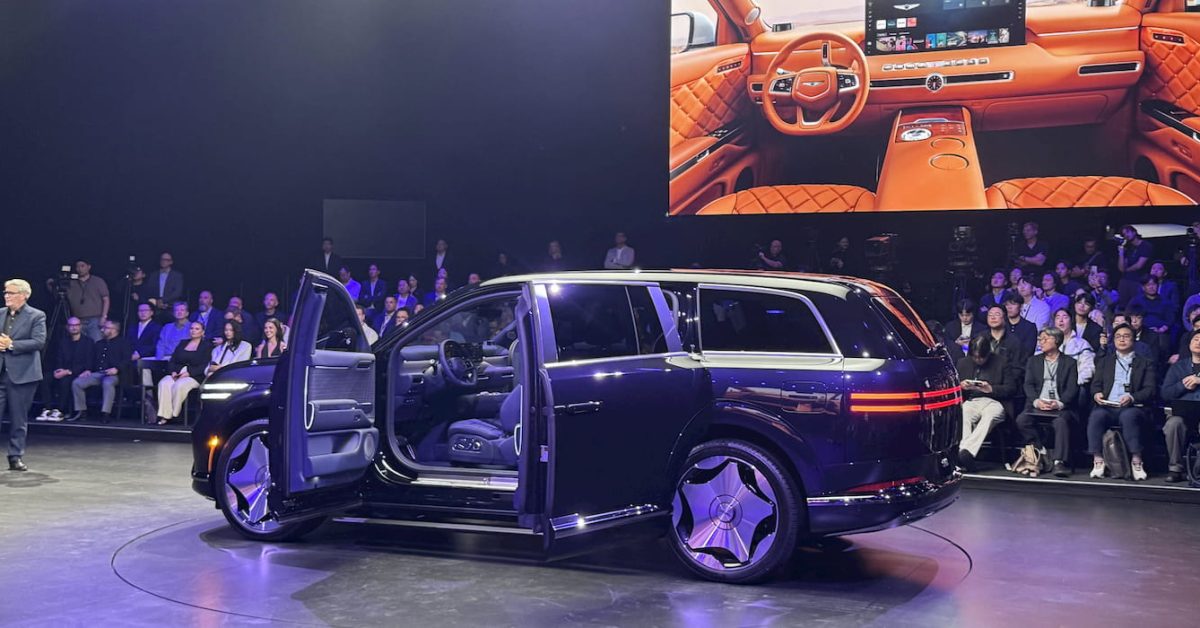
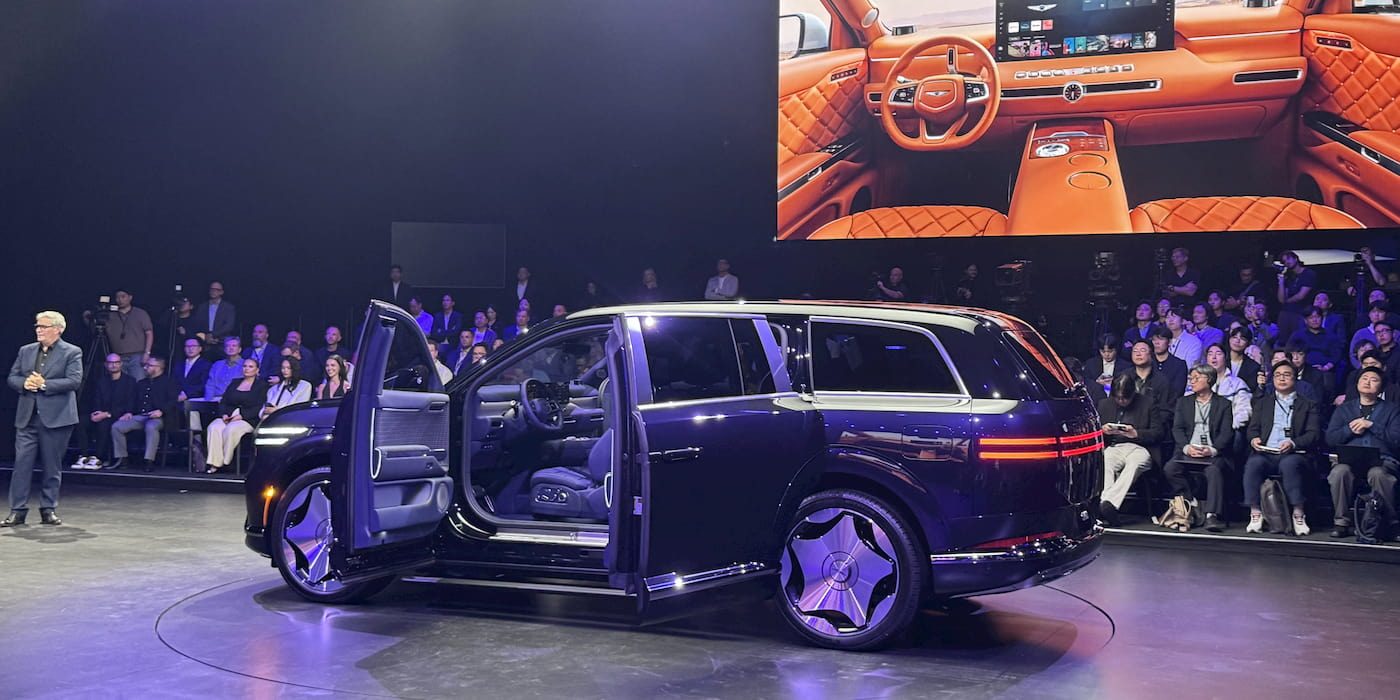
The is more than an ultra-luxe people mover. With a pop-up OLED cinematic display that extends to 24.6″, the flagship SUV transforms into a personal luxury movie theater, complete with a 25-speaker Bang & Olufsen 3D Sound System.
The Genesis GV90 raises the luxury bar
It’s been three weeks since Genesis at the Palace of Fine Arts in San Francisco on August 19.
We were invited out for a first look at the new flagship electric SUV. If you’ve seen the pictures, the GV90 is even more stunning in person. While the B-pillarless Neolun Arch Gate coach doors and swiveling seats stole the show, the pop-up Cinematic Display was another highlight.
The GV90 is the first Hyundai Motor Group vehicle to feature the new extendable display and the first Genesis model equipped with its Pleos Connect infotainment system.
Together, they create what Genesis calls a new realm of “display expandability.” While other vehicles, like the IONIQ 3, also use Pleos Connect, Hyundai developed an exclusive version for the GV90.
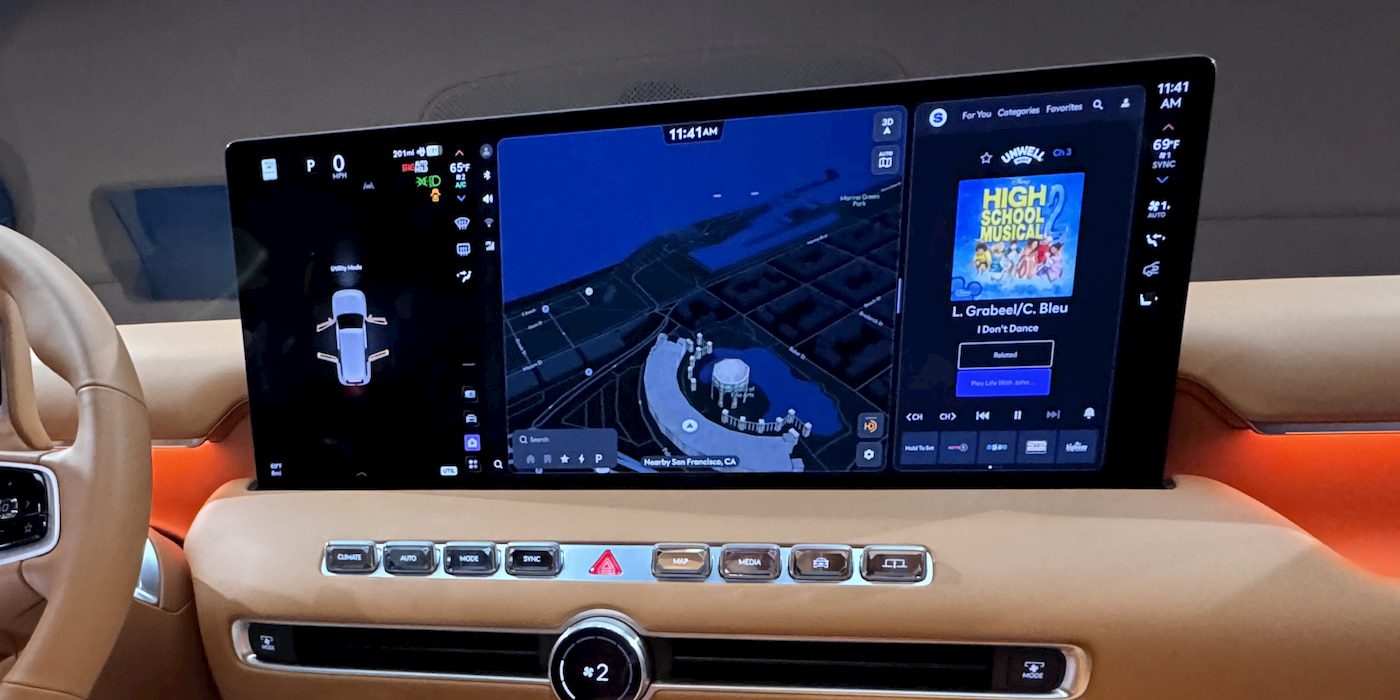
The display offers a custom experience, depending on whether you’re driving or parked. When driving, the infotainment screen measures 23.6″.
When the vehicle is parked, the screen can expand to 24.6″ at the push of a button, transforming it into a massive Cinematic Display.
Inho Yoon, who was responsible for designing and developing the GV90’s Pleos Connect system, said the decision comes as modern automobiles are now being used for more than just getting from Point A to Point B.
Electric vehicles, in particular, can serve as mobile power banks and more. Genesis aimed to “provide a highly immersive, movie theater-like experience,” Yoon explained.
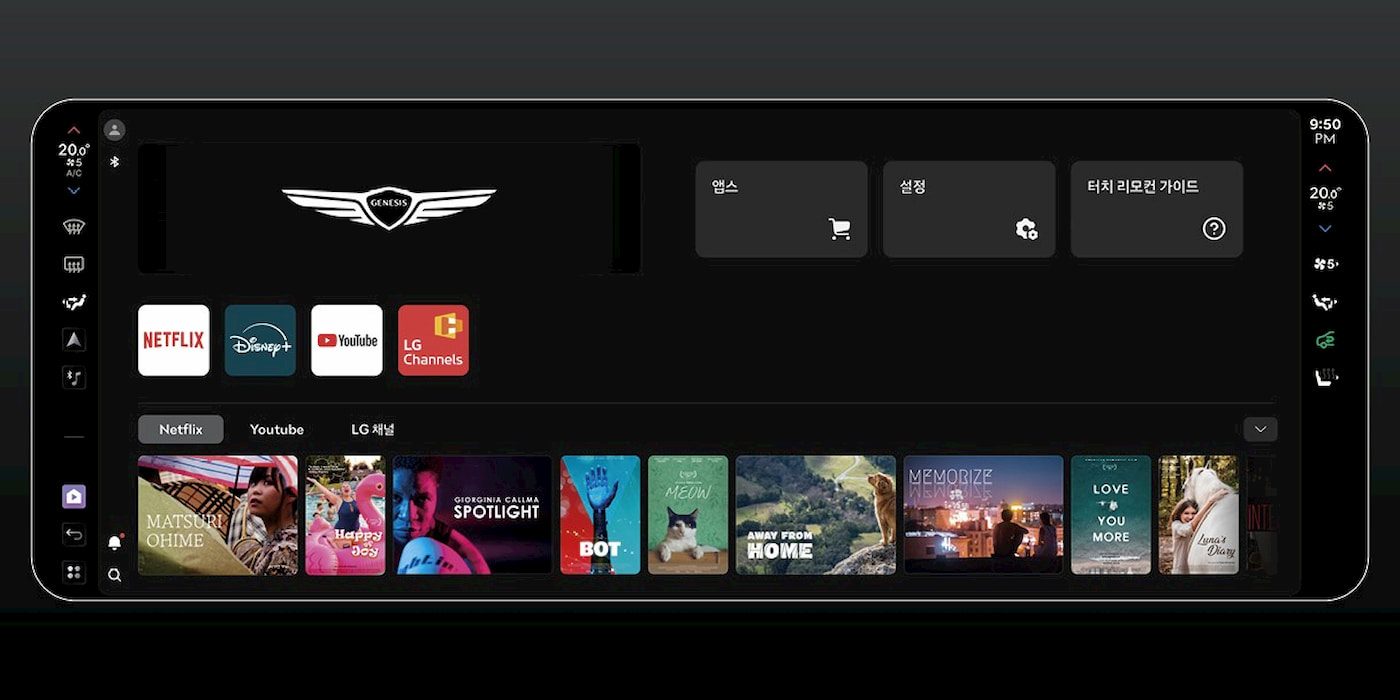
When the GV90 is parked and the screen is extended, the display switches to Media Home mode, letting you watch Netflix, live TV, stream music, and more with third-party apps.
To top it off, Genesis added a 25-speaker Bang & Olufsen Premier 3D Sound System with Dolby Atmos to make it sound like you’re actually at the movies.
While driving, the new Pleos Connect infotainment system was designed to “feel similar to the user experience of a smartphone,” said Lee Min-ah, a Senior Researcher at the Infotainment UX Development Team, who was responsible for the UX design of the GV90’s PLEOS Connect.
“I devoted considerable effort to designing the display’s app screen policies so that the experience of using navigation and other apps simultaneously could flow seamlessly,” Lee Min-ah added.
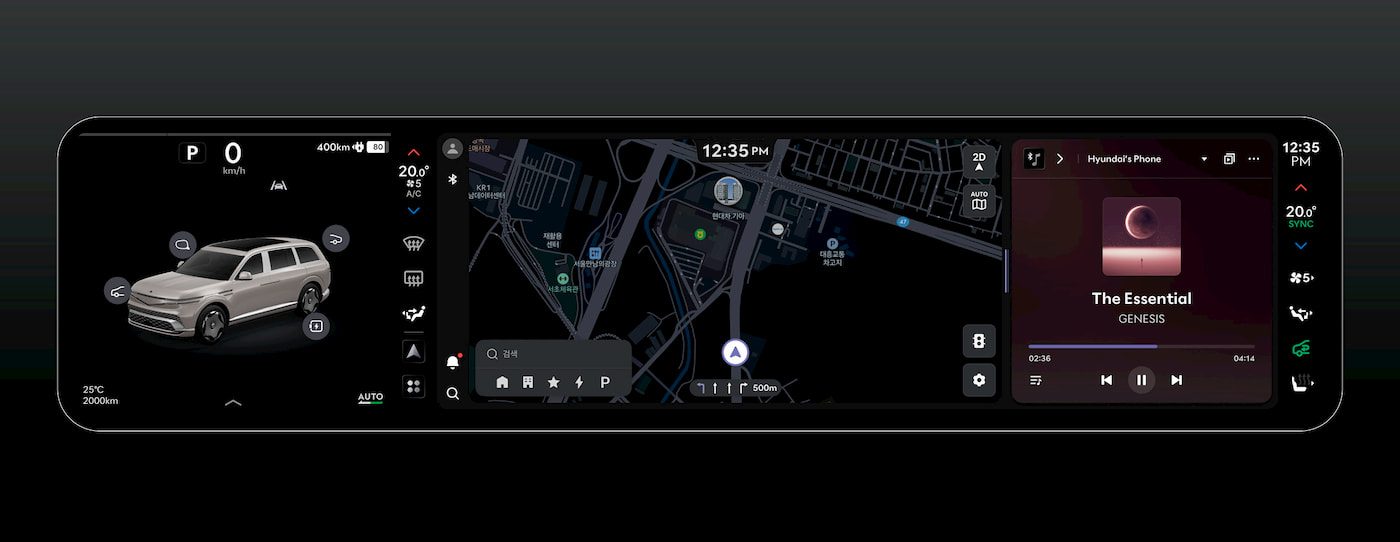
Unlike the Pleos Connect in other Hyundai vehicles, the GV90 features a unique menu bar on each side of the screen. The menu bar also features individual seat control buttons.
The driver’s side handles navigation, vehicle functions, and climate control, while the passenger side displays apps and media.
It also includes Gleo AI, Hyundai’s AI in-car companion, that you can use to control vehicle functions or search for information. You can ask it things like “find a restaurant near me” or search the web for news and sports.
Meanwhile, the GV90 also features a custom 25″ Head-Up Display (HUD) that projects the vehicle’s speed, turn-by-turn navigation directions, and other key driver info directly on the windshield.
Despite the massive digital screens, Genesis didn’t leave out the physical buttons. Several buttons are included below the infotainment for climate control, media, and more.
The Genesis GV90 will be available in GV90 Neolun, with coach doors, and standard GV90 variants, with traditional swing doors.
Powered by a 123.5 kWh battery, the largest among Hyundai Motor’s EVs, Genesis said the GV90’s expected range is around 310 miles (500 km) for the 7-seater version.
The GV90 is bigger than the and Kia EV9, measuring 208.1″ (5,285 mm) long, 79.9″ (2,030 mm) wide, and 71.5″ (1,815 mm) tall (71.4″ with 24″ tires), with a 127.8″ (3,245 mm) wheelbase.
Read more about the GV90:

