South Korea's National Intelligence Service estimated in May that Pyongyang received a minimum of $7.7 billion (€6.6 billion) in financial aid and economic value from in the preceding three years for — and potentially as much as $14 billion.
That is a significant amount given that the North's GDP for 2024 stood at $26.6 billion.
has been lucrative, and a slew of reports are now identifying where that money is being spent.
A portion of the funds is being put aside for the Regional Development 20x10 Policy, unveiled in January 2024 and which aims to construct modern industrial facilities in 20 regional cities per year for the next 10 years to improve living standards outside Pyongyang.
Why a new Russia-North Korea road bridge worries Ukraine
"Before the alliance with Russia, the general infrastructure was poor due to a mixture of economic mismanagement and sanctions," said Martyn Williams, senior fellow for the Korea program at the Stimson Center in Washington DC.
"With the breakdown in consensus on the United Nations Security Council and renewed trade with China and Russia, things are starting to move along now," he told DW.
"There are several large programs to build factories and hospitals across the country, [Kim] has ordered the development of entire new districts of Pyongyang and there's a rural housing project building tens of thousands of rural homes," he said, along with investment in "the modernization of several sectors of the economy. "
There are, however, structural problems that still need to be overcome, he said.
"There is investment going into building, but the large new hospital in central Pyongyang was built some time ago and sat unused for a while, until medicines and equipment could be procured," he said. "North Korea is great at building, but keeping it running is the key — so we look to see if that will happen. "
South Korea proposes talks to officially end war with North
The third area of heavy investment has been in major improvements in roads, ports and bridges. This is infrastructure that stagnated during years of isolation under international sanctions but is today required to facilitate the deployment of more troops to Russia and the arrival of advanced military technology, energy and consumer goods in return.
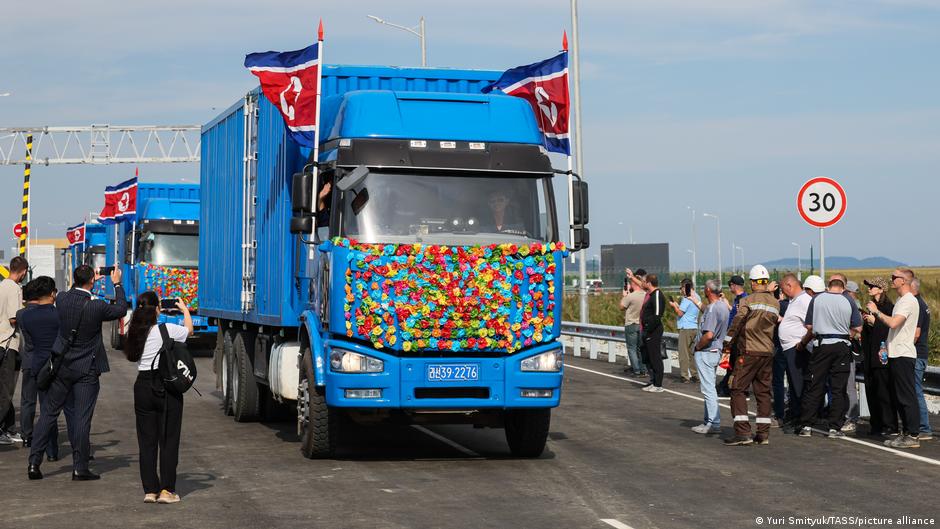
On Tuesday, and Russia opened their first road bridge across the Tumen River, with customs posts and warehousing facilities under construction on both sides of the waterway. The bridge underlines the rapidly expanding ties since Kim and announced a
The route will permit greater truck-borne exchanges, reduce costs and potentially be used for the transit of North Korean men, weapons and ammunition to Russia. It also further reduces the leverage of sanctions on North Korea.
North Korea expands role in Russia's war with Ukraine
"After difficult times during the pandemic, which was accompanied by border closure, the North Korean economy appears to have grown for the last several years on the back of Ukraine war revenues and cybercrime. "
Hinterland 'stagnating'
Noland said he has the impression that Pyongyang is faring relatively well economically, along with a number of cities on the China border thanks to renewed trade, "but the hinterland continues to stagnate. "
While the conflict and Pyongyang's alliance with Moscow have been an economic boon to North Korea, analysts say, it's not clear what will happen when the war inevitably comes to an end.
"The North Korean regime could be in a difficult spot if peace were to break out in Ukraine," said Noland. "If the war-related revenues were to dry up, the country could experience an economic decline and associated discontent after a period of rising expectations," he stressed.
"I am not saying that it would be enough to destabilize the system, but I do think that a transition to peace in Ukraine could present challenges that would have to be navigated by the regime. "
Edited by: Srinivas Mazumdaru