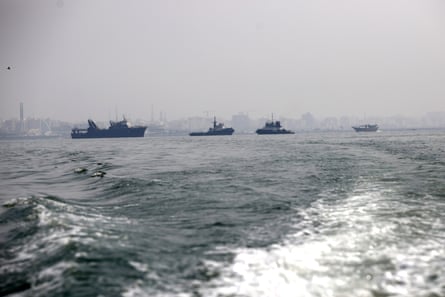
The strait is a critical route for global energy supplies, with up to 20% of the world’s oil and gas transiting it before the US-Iran war. The rising price of oil, above the psychologically significant $100 mark is likely to have knock-on effects on inflation and the price of goods. Stocks fell on Wall Street while rising fuel and food prices in the US will further frustrate the Trump administration, which faces a midterm election with an unpopular war and a cost-of-living crisis.
The US denied that its vessels were hit, with US Central Command saying in a post on social media that all “attempted attacks failed”.
A tanker in Iraqi waters carrying 2mi barrels of fuel oil was also struck by a drone, according to Iraqi officials. There were no reports of casualties among the crew and the Iraqi government said there were no reported oil leaks.
Iran said it also fired missiles at US bases in Jordan – 18 of which authorities said were intercepted while two fell in unpopulated areas.
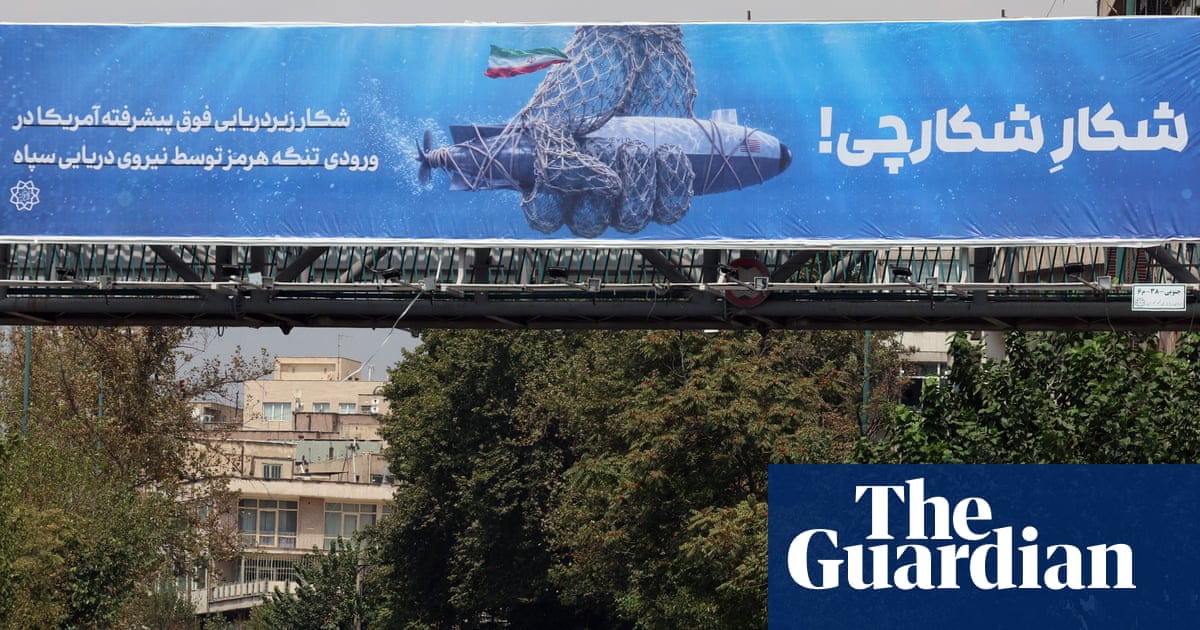
Iranian state TV said the US strikes had followed a “complex intelligence and operational action at dawn” to seize a US underwater drone in the strait. The US said that the seized craft was a “defective” older model that did not carry any sensitive data.
The back-and-forth strikes signaled an intensifying escalation between the two sides as Washington announced a new policy of attacking Iranian tankers if Iran targets its warships.
“Iran continues to try to hit US naval ships, and for every time they do that or try to do that, they’re going to lose tankers,” the US secretary of state, Marco Rubio, told reporters.
Iran said that it would also escalate its attacks, and that for every two or three tankers struck it would respond by hitting 20. The IRGC also said it would also release maps of a new, much-larger area near the strait that it considers forbidden for ships to traverse, extending as far as the Gulf off Chabahar for the first time.
The conflict has also taken on an increasingly regional dimension as the Iran-aligned Houthi movement in Yemen traded strikes with Saudi Arabia. The Houthis launched a wave of attacks on four cities in Saudi Arabia on Tuesday, causing large fires at oil installations and wounding 73 people. The Houthis said dozens of people have been killed in Saudi airstrikes, something unconfirmed by Riyadh.
Fighting re-ignited between the two sides after the Houthis launched an offensive against the Saudi-backed government of Yemen in south Yemen last week, aimed at reaching the Red Sea.
The group is trying to enforce a Red Sea blockade against Saudi Arabia, announced in July. If enforced, it would cut off another route for the kingdom to export its oil.