
Last month was the warmest August on record globally, surpassing 2023 and 2024, according to new data analyzedby the Copernicus Climate Change Service (C3S). The planet's average surface air temperature was 62.5 degrees Fahrenheit.
Spencer Platt/Getty Images
It was not only the warmest August on record, but the joint-warmest month for the planet across all calendar months, tied with July 2023, according to the organization's dataset, which begins in 1940.
Last month was also the first month since November 2025 to register more than 1.5 degrees Celsius warmer than the 1850-1900 pre-industrial average, reaching 1.65 degrees Celsius.
The 1.5-degree Celsius, 2.7-degree Fahrenheit, warming limit was established in the 2015 Paris Agreement and is a threshold climate scientists view as critical for avoiding the worst impacts of human-amplified climate change.
"Combined with record global sea surface temperatures and the warmest summer on record for Western Europe, these observations show how climate change is driving extremes across both the atmosphere and the oceans," Samantha Burgess, deputy director of the Copernicus Climate Change Service, said in a statement.
"The impacts of these conditions are increasingly being felt by communities, economies and ecosystems across the world," she added.
Jaime Reina/AFP via Getty Images
Record highs in global average temperature often occur during El Niño years, but the phenomenon isn't the sole reason for the record-breaking warmth, climate scientists say.
Short-term El Niño temperature spikes occur on top of the long-term global warming trend, which is primarily driven by human-caused greenhouse gas emissions.
Last month, global sea surface temperatures reached an all-time high, as El Niño conditions continued to strengthen across the central and eastern equatorial Pacific, and marine heatwaves persisted around the world.
On Aug. 22, the daily average global sea surface temperature between 60 degrees south and 60 degrees north reached 69.98 degrees Fahrenheit, the highest value on record, according to Copernicus.
It surpasses the previous record of 69.96 degrees Fahrenheit set in February and March 2024, during the last El Niño event. Global sea surface temperatures also reached a record for August, setting a new monthly record for the second consecutive month.
"This record is another clear signal of an ocean under growing stress. El Niño is adding heat to the system, but it is doing so on top of decades of human-driven warming," Burgess said.
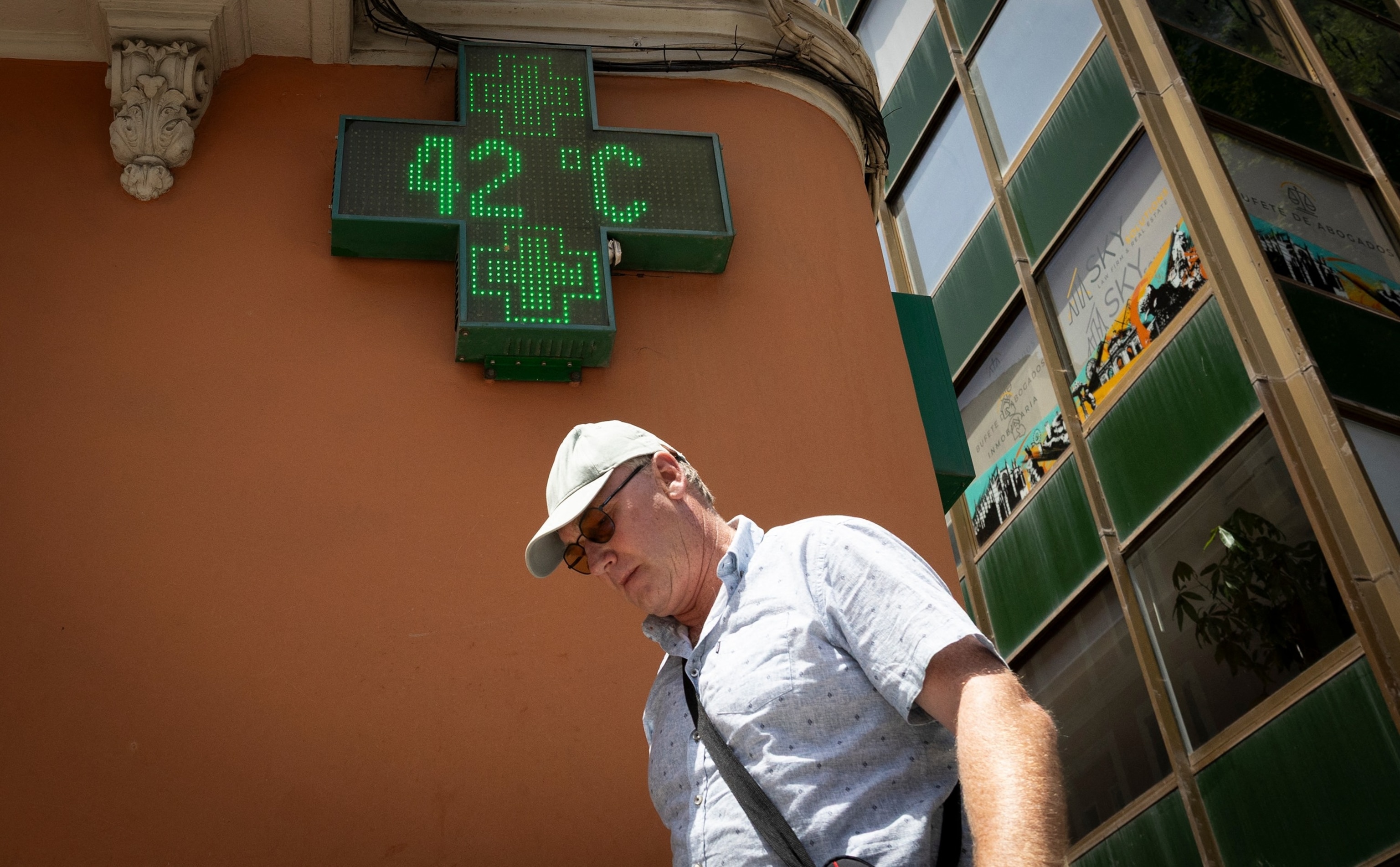
The meteorological summer in Western Europe brought exceptionally early, persistent and intense heat waves across the region and ranked as the warmest summer on record, surpassing 2003.

Pablo Blazquez Dominguez/Getty Images
Over the summer season, conditions were much drier than average in western and central Europe, southern Scandinavia and southeastern Europe, with water levels in several major rivers dropping dramatically and disrupting water supplies, irrigation and energy production in several countries.