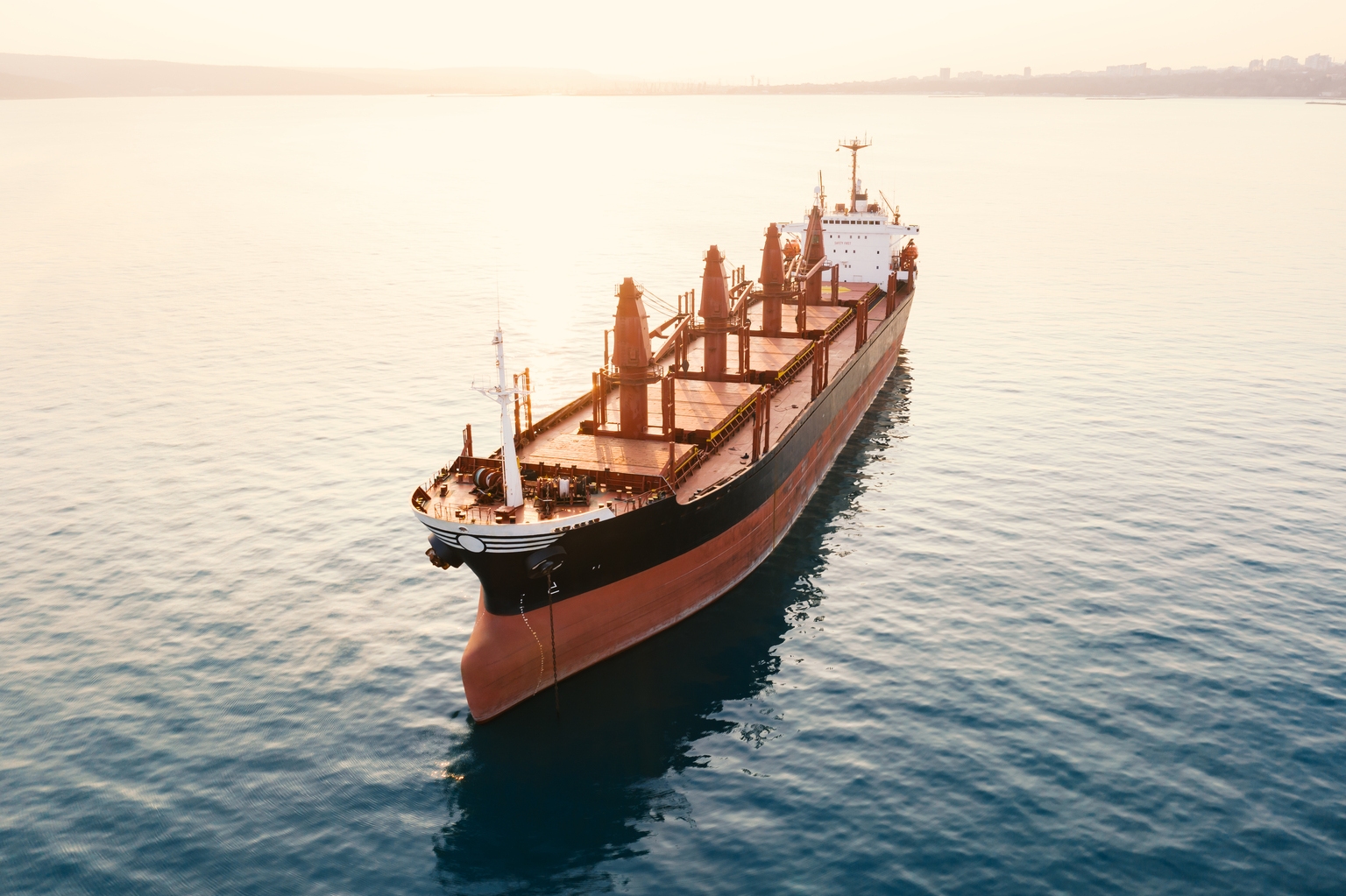
CMBT was my , which I shared on Seeking Alpha on 19 November 2025 when the stock traded at $10.20. We had previously added it to our exclusive shipping models at Value Investor's Edge at $8.58, and we made it a 2x conviction pick at Value Investor's Edge at $9.15. After roughly one year, CMBT has provided members of our research platform with a 134% return. From the public article, CMBT has returned 97% in 9.5 months.
Getting the right pick is important, but the related macro research and proper industry selection are also imperative to sustained outperformance. James Catlin, our Head of Macro Research at , predicted this specific dry bulk strength from November 2025 titled "Why Dry Bulk is a Top Pick in 2026. " In mid-February 2026, that "The Dry Bulk Bull Market is Just Warming Up. "
Despite the strong returns, CMBT and the dry bulk sector are still interesting at this juncture. I believe our recent interview will provide insights both for potential CMBT investors, but also for anyone broadly interested in the dry bulk sector, which includes peers such as Costamare Bulkers (CMDB), Diana Shipping (DSX), Genco Shipping (GNK), Himalaya Shipping (HSHP), Navios Maritime Partners (NMM), Pangaea Logistics (PANL), Safe Bulkers (SB), Seanergy Maritime (SHIP), and Star Bulk Carriers (SBLK).
I hope you enjoy the interview, and I look forward to a fruitful discussion in the comments section below.
Topics Covered
- (0:00) Intro / Disclosures
- (0:47) Q2 Earnings Review, Strait of Hormuz impacts, & the oil/coal swap
- (3:21) Appetite for fleet expansion & bulkers vs. tankers
- (5:35) Review of market cycle, bulker orderbook, tankers resale prices
- (8:32) Capital allocation: Dividends vs. delevering, tax withholdings, and return of capital dividends strategy
- (12:10) CSOV niche market discussion
- (15:03) Dividend policy forward: discretionary vs. explicit share of income
- (17:45) Spot vs. charter; any incentive to lock in more long-term bulker rates
- (18:58) Fuel efficiency of the modern fleet; dual fuel options, break-even rates
- (22:43) Simandou Guinea mine and effect on ton-mile demand
- (23:40) VLCC Morini / newbuilding charter; Tanker divestment strategy, revisited
- (25:26) Fleet-wide earnings durability / cash break-even
- (29:01) Green ammonia economics and the Fortescue deal
- (34:28) CMBT’s diversification thesis and final investment pitch
Full Transcript
J MintzmyerAll right, good morning everybody. Good afternoon if you're joining us from Europe. We're hosting another iteration of Value Investors Edge Live. I'll be your host, Jay Mintzmyer founder and president of Value Investors Edge. Today we're hosting CMBT Tech, specifically Alexander Saverys, the CEO, and Ludovic Saverys, the CFO. We will talk through the tanker markets, the dry bulk markets, and CMBT's strategy in the current markets. They just reported a very strong Q2 update, so we're excited to discuss that as well. As a reminder, nothing on the call or discussion today is investment advice or formal company guidance. For disclosures, myself, John Pace, and James Catlin currently have a long position in CMBT. Gentlemen, Alexander, Ludovic, welcome. Thanks for joining us.
Alexander Saverys
Thank you, good morning.
Ludovic Saverys
Hi. Morning.
J Mintzmyer
Yeah, absolutely. So CMBT happened to be the top public pick for Value Investors Edge. We posted a public article last November when your stock was trading in the mid-eighties. So we're all very happy, of course, with the current stock price and the performance, and the markets have worked out really well for us. I wanna open up with the discussion of your Q2 earnings, which you just shared a couple days ago. Looking forward to the second half of the year, I wanna also kind of bring up the discussion of the Strait of Hormuz disruptions. How do you see that as impacting the dry bulk rates, and are there any specific changes to your initial expectations earlier on in the year?
Alexander Saverys
No, thanks a lot. That's a good question. We discussed it last week. We think that the Strait of Hormuz obviously is affecting the tanker markets more than the dry bulk markets. There is, of course, a disruption on the transits for dry bulk vessels going in and out of the Middle East. But the biggest disruption from a dry bulk point of view is the coal to gas switching, or gas to coal switching. So more coal being transported on board of bulkers for countries that are replacing gas and oil with coal. And I think we've said it, it's more a Europe, Japan, Korea, Taiwan story than a specific China story, but it is supportive. It's supportive on ton miles, it's supportive on volume. So we would say that from a dry bulk point of view, that's probably the biggest effect of the Strait of Hormuz crisis.
J Mintzmyer
Now, one interesting nuance, you shared some expectations earlier on in the year, and we see that from the Panamax data you guys showed, we're up almost 24 million tons of cargo year to date, but China's imports are actually down 5%. So it's a very interesting balance there, especially as we expect more coal consumption in that region. So does that mean there's more potential above that high case or something going on in China? Any thoughts on that?
Alexander Saverys
No, there's definitely more potential. I mean, China is always the dark horse in this game, but also the place where the coal comes from. If you're talking Indonesian coal to China, obviously that's a very short haul. If you're talking more distant places, then that's longer haul. I would say that the coal story is panning out like we expected, but there's still some upside to it.
J Mintzmyer
Yes, it's certainly very strong dry bulk rates that we're seeing in the market today. And that's on top of the just gangbusters tanker market. And of course you've been a net seller of tonnage in the tanker market, CNBT is becoming more and more dry bulk focused play. Last year, you did the Golden Ocean transaction. And that was a little controversial for different reasons on the way that the transaction went through and the balance of buying Frederickson stake vs. tendering and merging with the rest of the stake. But in hindsight, with how strong the dry bulk market's been, it's looking really well, looking very good for your company. Is there any more appetite in dry bulk or do you think you have a sufficient fleet at this point?
Alexander Saverys
It's a good question. Look, we're very happy obviously with the way the Golden Ocean transaction panned out. You never know when the market is going to go up, but obviously we believe that the value in the age of the fleet, in the size of the assets that we were buying, which is very much askew to the Capesizes, Newcastlemax and a very interesting fleet of Panamaxes as well. Do we have more appetite in general to look at shipping files? Yes, we're always looking at good opportunities. Things are quite pricey today. So one thing is wanting to grow, the other is looking at the right value. I think, for now, we'd rather ride the cycle on dry bulk than just add more exposure at very high prices.
J Mintzmyer
Certainly makes sense. Based on our discussions at Marine Money last June and based on the real-time sort of transactions you're doing with the company, it seems you're kind of a net seller of tankers here and you're sort of riding the wave of dry bulk. Is that a correct summary?
Alexander Saverys
Yeah, that's very correct. We've been quite vocal about it. We think we're really at the top of the cycle on tankers. So if we see good prices on these assets or if we can cover on long-term time charters at good value, we will do it. We will use the proceeds to pay dividends. We will use the proceeds to deliver and we'll use the proceeds to look at other investments. But we're not in a hurry. We wanna do it at the right time. And so these three things we'll continue doing. On the dry bulk side, I think we haven't reached the top yet. It's very difficult to predict the markets, but I think if you look at supply demand, it's looking very good.
J Mintzmyer
And I'm glad you mentioned the supply-demand balance because for several quarters and here at Value Investors Edge now for several years, we've talked about the very favorable supply side, right? The fleet is aging, there's more regulations kicking in and the order book was quite small. However, with rates improving, naturally there's more orders. So we see more Capesizes, more Panamaxes delivering at 27, especially into 2028. We're now well above that previous decade average. Of course, the previous decade was muted, but how does that order book affect your outlook? Is it a little bit more of a balanced or cautious outlook at this point?
Alexander Saverys
Well, yeah, I mean, first this is a very natural thing to happen. You know, when markets improve, people usually order more ships. We'd rather see a very low order book for the next two, three years, but we know that eventually when rates go up, people order more vessels. I think the important thing on dry bulk is two things. One, the order book to fleet is still very reasonable. Two, 40% of the fleet is 15 years and plus and the dry bulk vessel suffers a lot more from operation than a tanker. So when we reached the age of 15 to 20 years, it's starting to become very, very expensive to go through a further special service on a dry bulk vessel, much more so than on a tanker. So even though the order book has now gone up to 14% on Panamaxes, 16% on Capesizes, which is higher than what it was, it's still very reasonable. And we believe that, you know, there's a big, big potential for scrapping to balance that market. So we're not worried on the order book on dry bulk yet.
J Mintzmyer
OK, so still a net favorable, of course, on that market is what I'm hearing from you guys. And we talked about the divestitures of the VLCCs and the couple Suezmaxes, you know, last year, of course, this was before the Iran conflict and the Strait of Hormuz disruptions. But you mentioned, you know, when you see an 18-, 19-, 20-year-old ship going above 50 million, that's kind of a clear indicator that it's a good point in time to divest and reinvest in newer vessels. Has that thinking evolved a little bit with the strength in the markets and you have a handful of tankers left. Are you thinking mostly at this point, those are steady divestitures?
Alexander Saverys
Well, we have a little bit more than a handful. So, still 22 tankers in our fleet. I think what has changed, obviously, and this is something we could not have predicted a year ago is, you know, the duration of this crisis in Iran and the fact that it has supercharged the spot market. We still believe that an 18-, 19-year-old assets above 50 million or above 60 million for a VL for a Suezmax is a very good price to sell at. We like to operate a young fleet. So we still have a couple of older vessels in our fleet that are definitely sales candidates, but we will do it as we always said in a good and pragmatic way, but selling all ships at these kinds of prices, we think, is sound management.
J Mintzmyer
Yeah, and it's been interesting to see the dividend returns. I mean, one of the, we'll just be blunt, you know, one of the drawbacks of your stock is the withholding tax, the 30% that comes out of regular dividends. But when you have these return of capital dividends, of course they're tax-free. So that's very favorable. So will, do you expect that as you divest a couple more ships, do you expect to see more of those tax free returns?
Alexander Saverys
Well, Ludovic can answer that one.
Ludovic Saverys
Sure, sure. J, I think it's right to say that we will do. We still have $1.7 billion of, I would say tax efficient distribution to be done. So there's still quite a way to go. But as we've announced, we do wanna take that into account when we distribute to our shareholders, is that fiscal point that is a fact because of our Belgian jurisdiction, that maybe we pay out dividends a little bit later so we can go through the whole motions of basically locking that distribution premium and be able to reward our shareholders with a lower withholding tax, yes.
J Mintzmyer
It certainly played out well in the thesis. I mean, last fall, there was a lot of skepticism in the market. You know, you had a fairly high leverage rate, maybe not when you adjust for the modernity of the fleet, but the overall leverage was, you know, in the mid 60s pushing 70%. And it made folks cautious and there was skepticism about the dividends, but it seems like we've turned that corner. The dividends have been flowing quite nicely and the leverage has come down. Is there any more work to do on the leverage side or do you feel pretty comfortable here in that 50% range?
Ludovic Saverys
I think we, of course, feel comfortable, and we felt comfortable back then, to be honest. I think leverage is one thing, but I think it's a plan how to deliver that it's more important when you do big leverage buyouts. And I think that plan, thanks to our diversified fleet, we could basically supercharge dry bulk, I would say exposure and return on equity, expected return on equity with the tanker divestment that we were having in the good markets. So are we comfortable? Yes, today. But when we don't have a fixed, I would say view on we need to divest further or we need to pay more dividends. I think it's a quarter by quarter analysis of the board of saying, can we use the nice cash flows from tanker, sales of tankers and dry bulk to reduce the leverage because there's no other opportunity, because there's no need to further deliver quickly. And so it's a timely view quarter by quarter on what is best now. I think when we did the golden ocean transaction, it was prudent management to hold the dividends just for a couple of quarters to see how it pans out. And now that it has panned out, they were able to deliver, distribute even more, bring our capex, which I think is important to state here as well. So we brought our capex from the 2.6 billion top that we had two years ago down to at the end of the year under 400 million. I think this obviously gives us more options for the boards to look at further delivering, further distributing or further investment at the right price.
J Mintzmyer
Yeah, certainly. And the distributions get everyone's ears perked up. I think that's the investor favorite at this point in the cycle, but we'll stay tuned and we'll see what the market gives us. Thank you Ludovic for that summary. And Alexander, thanks for calling me out when I said handful. You know, that's the advantage of having such a large fleet. Percentage wise, it's a handful, but 22 vessels is still a significant amount of tanker coverage or exposure. So thanks for correcting me there. And then I want to pivot to sort of the more niche categories you have. You have the CSOVs. Now you have three more on order. I think there's one XL, so I guess four total. Is there any specific updates on that niche in your business?
Alexander Saverys
Yeah, it's very good to mention it because it started as a small division with our CTVs, which are obviously 60 vessels that are costing between $4 and $5 million a pop. But now we move into the CSOVs, which are much bigger investments. And of course are bringing also a lot more revenue. So the update there is we've seen a slowing down of the demand for wind work, the North Sea in Europe. We've seen a big increase in demand from the oil and gas sector. And that's for a variety of reasons. The major ones being that our vessels are very high spec, high quality, good comfort for the passengers on board. And so you see that in this day and age, people want to have a decent amount of comfort on board of offshore oil and gas supply vessels. And that windships typically have this extra layer of comfort. And on top of that, there's just a lack of good modern vessels available in any case. So out of the first four CSOVs, three are operating in the oil and gas markets. Number three and four were just fixed to Brazil oil and gas projects for two years. The next number five and six, we are still negotiating. So I haven't fixed anything yet. Could go into wind, could go in oil and gas. There are some projects on wind still available there. And then what we call the CSOV XL, or what my colleagues call an MPASV, which is a multi-purpose accommodation service vessel, which is basically close to 200 passengers on board. So a much larger version of our CSOVs. That's really dedicated to oil and gas for the next five years. And then this will move to the much larger offshore wind projects. We still have options. We can order more of these. And this is probably a niche where we will probably consider to add some new buildings to our fleet.
J Mintzmyer
OK, so if there's any sector where we could see some more growth prioritized, it sounds like it's this niche sector here.
Alexander Saverys
Yeah, definitely in the short term. I think I've said many times in our quarterly calls that we think everything's very expensive. There's definitely asset types we would not order because of the price, because of the order book to fleet. But if you look at the CSOV segments, there's not been one order year to date. So there's still a bit of an order book to go through next year in 2028. But I think this will be absorbed by the market. But there is space, I think, to add some good modern assets to the order book for delivery 28 and 29.
J Mintzmyer
28, 29. OK, well, we'll stay tuned on that and see how that segment pans out. It's been really encouraging to see how such strong results across all three segments. And I know there's a lot of skepticism from myself included last fall about how this would pan out. But so far, so good. So I wanna pivot back a little bit to the topic that I think is on most investors' minds, and that's the dividend. And you've described your policy as discretionary. There's not formal guidance, but you've also pointed back towards a historical range, you know, 50%, 60% of net income. If you go back to legacy-wise, I know that's a new company, but legacy-wise, Euronav was up to 80% of earnings at one point in their payout policy. Is there any appetite to formalize that policy a little bit more and give investors a little bit more confidence, or do you expect to stay with that discretionary model?
Ludovic Saverys
No, I think we're gonna stick to the discretionary policy. And I think it's important for our company to remain flexible. And flexible because before you know it, we could have a big opportunity to invest counter-cyclically in markets that are maybe tough right now, but that have a big potential. And then as a prudent steward of capital, you need to be able then to decide with the boards of what the distribution policy is. We wanna avoid that we convince people with a spreadsheet distribution policy, which then changes, because then we think you will have a very strong, you could have a negative share price impact. But we want to reiterate that as we've done before, over a longer period of time, we think that's the right distribution policy for long-term investors. And we've proven it, and we hope that we'll continue to do that to all the shareholders.
J Mintzmyer
Yeah, just to summarize that, of course, you remain discretionary, you have full board authority at each quarter, decide where you wanna go. But you're saying, hey, look, historically 50 to 60% trust us, so that's kind of the hopeful expectation. Is that a fair summary?
Ludovic Saverys
Yes, that's a fair summary. All right, fantastic.
J Mintzmyer
And I just wanna kind of reiterate the priorities, make sure I've heard you correctly. I don't wanna put words in your mouth in any sort of way. But as we're looking at the priorities, you can spend money on dividends, maybe buybacks if the stock price was cheaper to nav, you can reduce leverage and strengthen the balance sheet, or you can renew the fleet. You have a few options in your toolkit. And as I'm hearing you today, based on tankers being sort of a seller's market, we're riding the wave on dry bulk; it sounds like there's a handful of CSOVs you could add in the future. It sounds to me like shareholder returns are pretty high on the priority list. D-leveraging is up there a little bit and expansion is kind of the third lower priority. Is that a fair summary?
Ludovic Saverys
Yeah, I think that's a fair summary. All right, I wanna look a little bit at the spot exposure you have here because dry bulk is significantly dry bulk spot exposed, which has been great. And you see the rates going up and you're gonna be able to capture a good amount of those. The Q2 results were phenomenal. Of course, Q3 backing off a little bit, but still pretty strong rates. Is there appetite to lock in a little bit more of those larger dry bulk vessels like some of the Newcastle maxes, or are you still thinking primarily spot on the dry bulk?
Alexander Saverys
Well, we've done a few, but we haven't really seen rates that would entice us to do a lot more right now. Now we're coming into a very active quarter. Rates are very strong on the forward market for next year. So it could be that we lock in a couple of vessels, but we haven't seen any no brainers. This being said, the market is on the move. So if we see some, we will take some cover. I think again, that fits into our ambition to have a good mix between spots and TC cover.
J Mintzmyer
Excellent, we'll see how that materializes. And certainly understand, you don't wanna leave too much on the table by locking those in. At the same point, you get some backstop of charters that helps increase confidence, both at the company level and the investor level. So I know it's a balance. We'll see how things materialize. I've gotten some great questions from some of the audience listening right now. They've just been texting me and sending in some of these questions. I'm gonna weave some of those in. One of the great questions that's came through is talking about your modern Newcastlemaxes. Can you talk a little bit about the fuel efficiency differences and gains of those modern vessels compared to some of the legacy capes, say like 2010 builds?
Alexander Saverys
Yeah, I mean, we've highlighted this a couple of months ago to show the difference between your traditional 2010, 2012 built capesizes versus a 2026 built Newcastle maxes. I mean, the consumption differences are massive. We're basically moving more cargo and burning less fuel. So this is a position we like to be in. Let's not forget there's the 28 Newcastlemaxes, new buildings that we have, but we also bought a very young fleet with the Golden Ocean fleet. So we're very, very well positioned, definitely in a high bunker environment. Now, just to mention on the Newcastlemaxes as well, a question you haven't asked us is, what about the dual fuel Newcastlemaxes? So I hope that in the next couple of weeks we'll come with very good news that the sea trials of our Newcastlemaxes have been successfully accomplished. And that we can also show to the market, not only how we are more efficient on the VLSFO, but also that we now have dual fuel ships that can offer a fantastic decarbonization optionality, which we believe will create value going forward. I know there's not been a lot of skepticism about that or skepticism about that, but I think if you will see the results, I hope that we will have happy shareholders looking at the investments that we have made.
J Mintzmyer
Yeah, well, we'll stay tuned and looking forward to hopefully a press release or presentation updated slides on some of the results of the sea trial and some of the expectations you have. Of course, you got to look at the different fuel curves and there's a lot of math involved there and some assumptions of course, but we'll look forward to those updates. Can you put that a little bit more into like a dollar per day difference? I mean, if you look at the capesize index, we've seen rates in the thirties pushing up to the forties briefly in spot. How does that translate to your modern vessels in like a dollar per day for TCE?
Alexander Saverys
Well, a dollar per day, if you look at the C5 route, so Australia to China, your traditional older cape earning $35,000 a day will be on a newcastlemax $55,000 a day. So there's a $20,000 difference. Obviously there's an intake, extra intake on the nuke, but there's also a big, big saving on your operation.
Ludovic Saverys
And I think Alex and Jay maybe to mention as well that you also have to look at the bigger intake, you know, the route you're taking, but also at which point in the cycle are you? Are you in high freight environment or low freight environments? Typically on very modern assets, because you consume so much less, the portion of bunker costs into your freights will increase relatively much higher in a low freight market environments. So in bad freight market environments, your gains are gonna be much bigger. So you could have, you know, instead of 40% outperformance on your 2012 or regular Capesize, you could go up to a hundred, even 200%. So in effect, it's from a risk mitigation point of view, it's also very interesting to have that modern tonnage when the markets are bad. Now, luckily it's not this moment, but it's an extra tool again that we have to manage our risk.
J Mintzmyer
Yeah, that's a great point. Because if you're looking at 15, $20,000 a day of advantage, the rates are 50, right? It's still great, it's awesome, but it's less than if the rates are 15, right? So certainly a difference in impacts. I appreciate you unpacking that a little bit. One of the most bullish things we've been looking at on the Capesize market and dry bulk overall is the Simindu mine out of Guinea and expecting more bauxite and iron ore flows coming in that direction. So far, it seems like China's doing most of the work with their own fleets. Are you seeing increased third-party action in that market or is it more of China's taking that market and alleviating some of the other basins?
Alexander Saverys
Well, your timing of the question couldn't be better. We fixed our first cargo last week. So it's indeed a very much China-centric trade so far, but volumes are increasing. And so we fixed our first cargo out of Simindu last week.
J Mintzmyer
Excellent, excellent. Yeah, we expect to see many more of those, but it's been a slower uptake in the third-party independent market, but we're glad to see it. Obviously, it's transpiring in the broad indices, right, in the broad rates. This is a very niche question here, but I'm just going through some of the great questions we've got. Do you have a specific update on the VLCC Morini? I think there was a contract negotiation ongoing a while back.
Ludovic Saverys
On the new building Morini?
J Mintzmyer
Correct.
Ludovic Saverys
And with regards to the one-year charter?
J Mintzmyer
That's right.
Ludovic Saverys
Yeah, I mean, we fixed two of our five VLCC new buildings on a one-year charter. Well, as you know, we don't mention the rate, but I think you can figure out the rates if you just look at the market rates right now. So two out of five have been fixed.
J Mintzmyer
OK, and very much in line with the one-year charter rates we've seen from some of your peers.
Ludovic Saverys
Yeah.
J Mintzmyer
Excellent. I'm looking forward to that. Looking at some of the other questions here, we have one question about the tanker markets and whether or not you are becoming more of a straight seller in that market. It seems like the answer's yes at this point. I don't know if you have anything else you want to add there. I mean, you got 22 ships left. Is there any point in time where you would say, "OK, the rates are great. We're enjoying it. Well, we have a few that are fixed. We'll just keep riding those off, but we might divest the rest of the spot and just lean heavily just into bulk. "
Alexander Saverys
Yeah, well, there are three things. The first ambition we had is to clear out some of the older tonnage at good prices. I think we did most of that. We still might have one or two ships that are quite old that we might sell. Second, if we see prices that are really nearly too good to be true, then we'll look at it. I mean, you saw that we sold three younger Suezmaxes, which we believe were really prices we could not say no to. And third is it's our ambition to keep a crew tanker division with modern assets. So we have still vessels that we'll probably wanna keep going forward. So I think that's the answer to that question.
J Mintzmyer
Excellent. And another good question coming in about the earnings quality and durability across the cycles. Once you get the full ordered book delivered and you're almost there, right? There's not a lot of capex left, but what sort of fleet-wide cash break-even are you looking at across the entire fleet? And I guess you can probably take the CSOVs out. They're pretty niche, but just looking at the tankers and bulkers, what is the sort of a pivot point, I guess, number one, for operating cash flow, right? So you have positive cash. And then number two, if we're looking at gap earnings, what sort of numbers, just roughly speaking? I know that's very, very specific, Ludovic, but can you help us out there a little bit?
Ludovic Saverys
Yeah, sure. I mean, it's tougher for us to give a portfolio cash break even and P&L break even. We do, I wanna highlight that in our earnings goal presentations, we do put it in. So if you wanna dig deeper, there's per vessel type, and even like a VLCC, Suezmax, a bulker, on the Newcastlemax and the Panamaxes. So we do have that in there, but in general, on the spot ships that we have, you're talking between 22 and $30,000, I would say, as a P&L breakeven. Cash break even depends on the leverage that we have and the financial structure we have is more or less in line. So if one would really wanna make a quick back of the envelope calculation, look at our spot days, take 25,000 if you wanna take an average, and then you make the math between the current earnings and the upsides or downside potential. But I do wanna point out to the earnings goal presentation where we have that per ship.
J Mintzmyer
Yeah, excellent. And we'll make sure the slides are linked so folks that are listening to this recording at a later date can get in there and do their own math and plug in their own assumptions, right? We don't want to overly forecast, right? Forecasts are always difficult, even one week out, especially several years out. So we'll do our best there and provide everyone the resources so they can make their own investment analysis and their own investment decisions. I do wanna just caveat though, and when you talk about the 25,000, that's the realized rates, right? So like when folks are looking at the Capesize BDI or BCI rates, they need to add 15 or 20,000 to that. Is that right?
Alexander Saverys
Sorry, J. The Newcastlemax, the Newcastlemax break even is just a tick below 30,000. If you wanna work the BDI to a new crate, then indeed you need to add that.
J Mintzmyer
Yeah, so folks are looking at the Baltic indexes, which are still based on legacy vessels and legacy rates and not the eco updates and definitely not with dual fuel. Your breakeven is closer to like 15,000 on that index. Is that right?
Alexander Saverys
No, so I don't know what you're trying to say there, but you need to look at, when you look at the BDI index, it reflects 180,000 dead weight Cape size with a certain consumption number. Comparing our fully modern Newcastlemaxes will mean that the BDI earning will translate it to a much higher earning for Newcastlemax. But the breaking for Newcastlemax will still be a 29 to $30,000.
Ludovic Saverys
But if you reverse calculate it, Alex, then the BCI implied cash break even, break even is indeed between the 15 and $18,000.
Alexander Saverys
Yeah, yeah, OK.
J Mintzmyer
Yeah, sorry, coming at this, we're saying the same thing in different ways, but obviously a lot of investors, we look at the index rates and we hear on the call today, oh, the break even is close to 30. But when you're looking at those index rates, understand that you guys are massively outperforming the standard index. That's kind of the question or point I was making.
Alexander Saverys
Correct, correct.
J Mintzmyer
All right, fantastic. One more question coming in, Q3, looking forward, talking about the ammonia allocations. Can you talk a little bit, I know you have sea trials coming up, but what is the anticipated difference here? Is it mostly based on client preferences for less carbon emissions, or do you think there'll actually be a straight dollar benefit in today's market with the fuel costs?
Alexander Saverys
There's definitely going to be a straight benefit if we trade to Europe, because that's the only region where there's existing regulation on the CO2 emissions. There will be a benefit if some of our customers in the East want to pay to lower their CO2 emissions. And you've seen the deal that we announced with FortisQ. So that's definitely one of the customers looking into this very, very seriously. So this is going to continue to be the approach we have with our green ships. It's on the one hand, operating them in regulated markets like European markets. On the other hand, operating them with like-minded partners. It's Fortescue, but it's also MOL, as we announced last year, that want to operate these vessels to lower their carbon footprint.
J Mintzmyer
And when we unpack that Fortescue agreement a little bit, I know some of it's probably confidential, but just thinking about it from an investor and a risk standpoint, those fuel costs can be very volatile, very dynamic, right? We're still building the infrastructure. I mean, it took many years to develop even LNG bunkering, right, is still in the earlier stages. Ammonia, much more. So what's the risk factor of the green ammonia cost and the price risk there? Is that baked into the contracts? Is it shared? Is it on the customer? How do we think about that?
Alexander Saverys
Yeah, so it's baked into the contract and it's shared. The Fortiscue deal, you should really look at it as a framework agreement, which is still being developed as we speak, 'cause there's a couple of vessels that are already trading with them, others that still need to be delivered. And then there's a mix of vessels that will be fully fitted with ammonia engines and vessels that will be retrofitted at a later stage. But on the fuel element, it is definitely the aim to share the cost there.
J Mintzmyer
Certainly makes sense.
Alexander Saverys
And to the benefit.
J Mintzmyer
Yeah, absolutely. No, it certainly makes sense. Obviously the main exposure at this point in time, tanker markets still have a little bit of exposure. The CSOVs have a little bit of upside potential, but the main market exposure here is gonna be the dry bulk spot rate. So we'll watch that really closely. It sounds like you both are optimistic about maybe potential strength or even higher rates upcoming. So we'll see on that. Fingers crossed, your operational execution has been excellent so far. I appreciate your recap of your financial priorities. Talking about deleveraging, you're pretty comfortable here. Might do a little bit more if you have some asset sales. Sounds like dividends, shareholder returns are top of mind. Sounds like a little bit less focused on growth, which obviously cycle dependent. But I think shipping investors like to hear that. I think there's been cases in the past where we get to the top of the cycle and everyone gets a little bit too hungry for more assets. So we appreciate your pragmatic view. It's difficult to find tanker owners today who are not super, super optimistic. So I definitely appreciate your more pragmatic view on the assets. Anything more to add about the dry bulk market or your positioning, or do you think we've covered most of that?
Alexander Saverys
No, I think we've covered all the most important items. It's going to be dynamic. I mean, this is shipping, and this is why all of you listening here like the shipping story. But I think definitely on dry bulk, there's a lot of strength underneath. So we might see little wobbles in the next 12 months, but underneath we see a very good volumes being moved on ships.
J Mintzmyer
And that's really makes sense.
Ludovic Saverys
And maybe if I can add there as well, I think it's the fact that we're diversified. It's a question we often get from people, why shouldn't I just buy frontline, a little bit of Starbuck, a little bit of MPCC. I think it's when you're a company like ours and you have diversified flows and you get good access to capital from banks or from the capital markets. Our biggest differentiating factor is that we can go pretty big when markets look more difficult. I think the example on Euronav acquisition, on GoldenOcean acquisition, on the big order book that we did, you can go a little bit counter cyclical and then try to manage the risk while the market is materializing. And I think this is something that in the coming years, we might look when the right opportunity is there, is that again, you can try to reciprocate the Golden Ocean transaction, the Euronav transaction, whether in those markets or in different asset types. And then we really look at our vessels from a portfolio point of view and try to rotate the capital when we think there's a lot of upsides.
J Mintzmyer
It certainly gives you optionality. Now, of course, as an investor, I'm biased. I have a long position in CMBT. It's been a very enjoyable position. So we're sharing the benefits together. From an investor point of view, I certainly prefer the return both of capital and on capital that we're enjoying today. So I hope that remains the priority, but understand the market a year from now, two, three years from now might be much different. So keep our eyes open and watch and see how the market turns. And it's good to see that you're eyeing that and have that optionality. So I think that's a great segue to, as we wrap up today, sort of the closing pitch for investing in CMBT. And you sort of alluded to it, right? Because you said, "Hey, some investors are saying, "why don't I just buy a tanker company? "Or why don't I just buy a bulk company "and do my own sort of allocations? " But there's a lot of investors out there as well who are maybe less familiar with your company. It's a little bit newer to the space, not newer by legacy and history, but newer as a stock, right? And so why should investors at this juncture, right? They're looking at your stock price and they're like, "Man, it's more than doubled since last year. " Why should they prioritize or consider an investment here versus either staying away entirely or looking at some of your other peers?
Alexander Saverys
Well, look, it's diversified, it's young. You get decarbonization optionality for free. And you're talking to two people in this call that are fully aligned because we are shareholders like you and we want this company to have a good long-term future.
J Mintzmyer
All right, the alignment, the long-term vision and the diversification. Thank you very much, gentlemen, for joining us this morning. I guess it's afternoon to you. We really appreciate your time, both Alexander and Ludovic, again, thank you.
Alexander Saverys
Thank you very much.
Ludovic Saverys
Thanks a lot, bye.
J Mintzmyer
All right, this wraps up another iteration of "Value Investors Edge Live. " We just hosted the CMB Tech team, specifically Alexander Savory is the CEO and Ludovic Savory is the CFO. We talked a little bit about the tanker markets, the current asset prices. We talked about dry bulk. We talked about the niche CSOV fleet, talked about company priorities and strategy and then what differentiates CMBT from some of its peers. As a reminder, nothing on today's call constitutes official company guidance or investment recommendations of any form. Myself and several members of the "Value Investors Edge" team currently have a long position in CMBT. This interview was recorded on August 31st at about 10 o'clock Eastern time. Please be advised if you listen to a recording or read a transcript at a later date, these positions and disclosures may have changed.
Editor's Note: This article covers one or more microcap stocks. Please be aware of the risks associated with these stocks.
