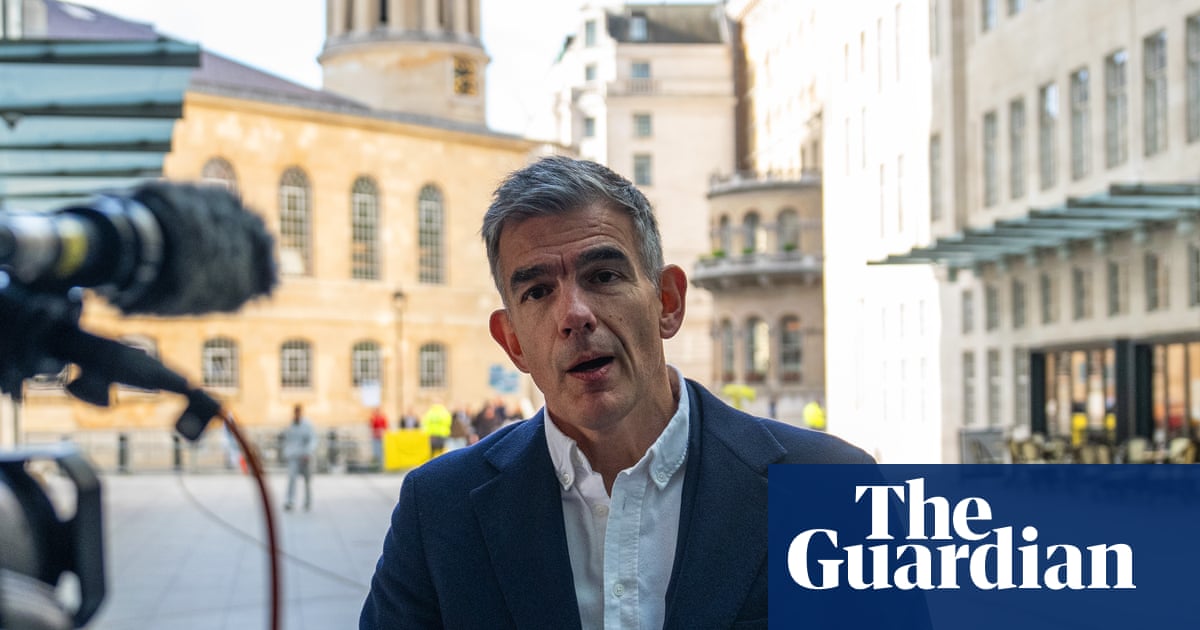
In a call with staff on Tuesday, Matt Brittin faced a series of questions over both the corporation’s plans for huge cuts, as well as pay talks that have now seen staff reject an average 2.1% salary increase.
With figures across the BBC already anxious over job cut plans to be announced in the next few weeks, Brittin acknowledged that there was a serious prospect of strikes.
“I understand that there might be [industrial action],” he told staff. “I think it would be difficult. But I think we have to face the fact that we are in a really disruptive time for the entire industry. So I hope that people listening to this and talking to colleagues and union leaders as well understand where we are.”
Brittin, who took on the BBC’s top job in May, is overseeing cuts designed to save £500m by 2028. The plan was drawn up before his arrival, but he is attempting to make significant changes to reshape the BBC as part of the process.
He acknowledged that there was anger that the alleged failure to grasp the BBC’s financial problems earlier had left the corporation needing to make such deep cuts.
In response, Brittin pointed to previous internal findings that the BBC has lost £1.3bn in revenue in the last 10 years, most from government decisions such as freezing the licence fee. However, 40% comes from more people choosing not to pay the fee amid the rise of streamers and digital platforms.
Brittin repeated his admission that he had not fully understood the extent of the BBC’s financial woes when he started the job. He said the BBC had run out of reserve funds, while income from its commercial division had already been spent.
“There’s really not a lot of elbow room for anything,” he said. “That’s quite tough … that’s the context that we’re in.”
In a warning to staff, he suggested that increasing the pay offer further would hamper the BBC’s ability to reduce job cuts.
“One per cent on pay for everybody is equivalent to about 180 jobs,” he said. Asked if it was a choice between job cuts and more pay, he said: “That’s the choice that you have to make at a management level … to award more you’re going to have to find the money from elsewhere. The cupboard is bare.”
As part of the increased pay offer, he said the most senior executives would have no pay rise, while the lowest paid would have an increase above 2.5%.
Strike action by BBC staff would come as a huge blow, coming at a time when Brittin is championing its national importance as talks continue with the government over its future funding.
Despite its financial struggles, the BBC still commands a unique place in global media, as one of the most trusted brands in the world. It also reaches 94% of adults every month in the UK.
During the staff call, several members of staff confronted Brittin and Kate Phillips, the BBC’s chief content officer, over the decision to renege on a guaranteed job offer made to a group of apprentices, as revealed by the Guardian earlier this month.
“I absolutely get the devastation that we can’t guarantee that now because of the recent savings challenges,” Phillips said. “I do know that [BBC News] are doing everything they can to find placements for those people.”
It comes with all traditional broadcasters facing financial pressure. Channel 4 is planning to slash 340 jobs, equating to 28% of its workforce.
